Roasted Red Pepper and Goat Cheese Stuffed Chicken
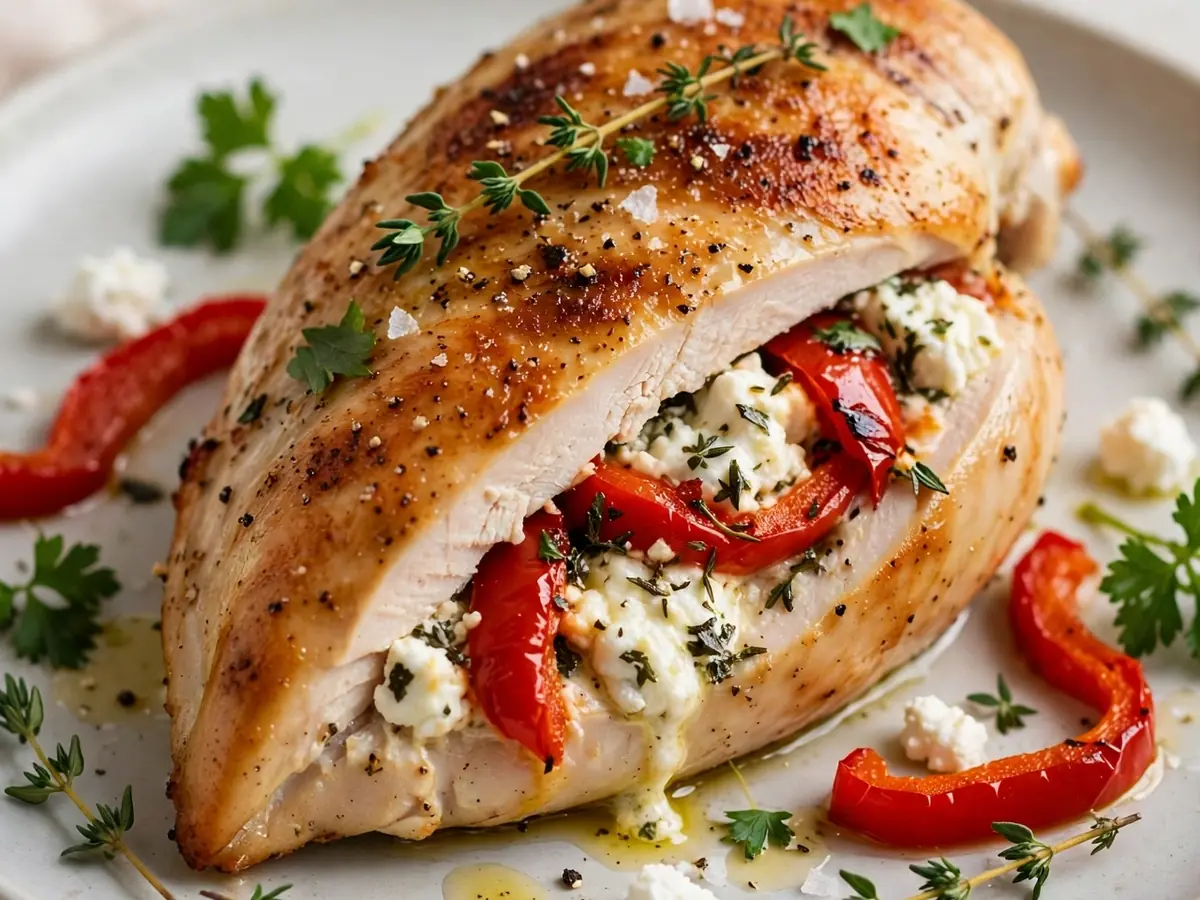
Stuffed chicken breasts occupy a sweet spot in home cooking: impressive enough for a weekend dinner yet practical enough for a Tuesday. This version pairs sweet, smoky roasted red peppers with tangy goat cheese and a whisper of garlic, all wrapped inside a juicy chicken breast and finished with a bright, herb-flecked pan sauce. The filling takes about five minutes to stir together, the chicken roasts in under half an hour, and the whole dish comes together in a single skillet, which means fewer pans and more time at the table.
The technique matters as much as the ingredients. A proper pocket, a quick sear, and a gentle finish in the oven give you chicken that stays moist while the filling turns creamy and warm. Below you will find exact quantities, the equipment that makes the job easier, step-by-step instructions, and plenty of practical guidance on substitutions, make-ahead options, and safe storage.
Why This Recipe Works
Three elements carry this dish. First, the filling is thick enough to stay put. Goat cheese acts as a binder, so the peppers and herbs do not spill out during searing. Second, the chicken is seared before roasting, which builds a golden crust and a savory base for the pan sauce. Third, the sauce is made in the same skillet, using the browned bits left behind. That deglazing step takes two minutes and delivers flavor that tastes far more complicated than the effort involved.
Roasted red peppers bring sweetness and a slight smokiness that balances the tartness of the goat cheese. If you keep a jar of roasted peppers in the pantry, this becomes a pantry-friendly recipe. Fresh peppers work too, but they need to be charred and peeled first, which adds time.
Ingredients
Serves 4
For the chicken and filling:
- 4 boneless, skinless chicken breasts, about 6 to 7 ounces (170 to 200 g) each
- 4 ounces (115 g) soft goat cheese, at room temperature
- 1/2 cup (about 3 ounces / 85 g) roasted red peppers, drained and finely chopped
- 2 tablespoons finely chopped fresh basil, plus extra for garnish
- 1 tablespoon finely chopped fresh parsley
- 1 small garlic clove, grated or minced
- 1/4 teaspoon fine salt, plus more for seasoning the chicken
- 1/4 teaspoon freshly ground black pepper, plus more for seasoning the chicken
- 1 tablespoon olive oil
For the pan sauce:
- 1/2 cup (120 ml) low-sodium chicken broth
- 1/4 cup (60 ml) dry white wine, or additional chicken broth
- 1 tablespoon unsalted butter, cold
- 1 teaspoon fresh lemon juice
- Salt and freshly ground black pepper, to taste
Equipment
- Cutting board and sharp knife
- Small mixing bowl
- Oven-safe skillet, 10 to 12 inches (25 to 30 cm), preferably cast iron or stainless steel
- Meat mallet or rolling pin (optional, for pounding)
- Kitchen twine or toothpicks (optional, for securing)
- Instant-read thermometer
- Tongs
- Aluminum foil
Preparation Instructions
- Prepare the oven and chicken. Preheat the oven to 400°F (200°C). Pat the chicken breasts dry with paper towels. Working with one breast at a time, place it flat on the cutting board. Hold your knife parallel to the board and slice horizontally into the thickest side, cutting about three-quarters of the way through to create a pocket. Do not cut all the way through. Repeat with the remaining breasts. If a breast is very thick, you can gently pound it to an even 3/4-inch (2 cm) thickness before cutting the pocket.
- Season the chicken. Season the outside and the inside of each pocket generously with salt and pepper. Let the chicken sit at room temperature while you make the filling.
- Make the filling. In the small bowl, combine the goat cheese, chopped roasted red peppers, basil, parsley, garlic, 1/4 teaspoon salt, and 1/4 teaspoon pepper. Stir until evenly blended. The mixture should be thick and scoopable, not runny.
- Stuff the breasts. Divide the filling into four equal portions, about 3 tablespoons each. Spoon one portion into each pocket and press it gently to distribute evenly. Do not overfill, or the cheese will escape during cooking. If the opening seems loose, secure it with one or two toothpicks or a short loop of kitchen twine.
- Sear the chicken. Heat the olive oil in the oven-safe skillet over medium-high heat until it shimmers. Carefully place the stuffed breasts in the skillet, presentation side down, and cook undisturbed for 3 to 4 minutes, until deeply golden. Flip with tongs and cook for 2 minutes more. Transfer the skillet to the oven.
- Roast. Roast for 15 to 20 minutes, until the thickest part of the chicken reaches 165°F (74°C) on an instant-read thermometer. Begin checking at 15 minutes, since breast size varies. Remove the skillet from the oven and transfer the chicken to a plate. Tent loosely with foil and rest for 5 minutes.
- Build the pan sauce. Place the skillet over medium heat. Pour in the white wine and scrape up the browned bits with a wooden spoon. Simmer for 1 minute, then add the chicken broth and simmer for 2 to 3 minutes, until reduced by about half. Remove from the heat and whisk in the cold butter and lemon juice until the sauce is glossy. Taste and adjust salt and pepper.
- Serve. Remove any toothpicks or twine from the chicken. Slice each breast on a slight diagonal, if desired, and spoon the pan sauce over the top. Garnish with extra basil and serve immediately.
Cooking Times at a Glance
- Sear: 3 to 4 minutes on the first side, 2 minutes on the second
- Roast: 15 to 20 minutes at 400°F (200°C)
- Rest: 5 minutes
- Pan sauce: 3 to 4 minutes
- Total active time: about 25 minutes; total time: about 45 minutes
Tips for the Best Results
- Keep the filling cold until stuffing. Chilled goat cheese filling holds its shape better and is less likely to leak.
- Do not overstuff. A scant 3 tablespoons per breast is plenty. Excess filling pushes out as the chicken contracts.
- Dry the peppers well. Pat roasted red peppers with paper towels before chopping. Extra moisture makes the filling loose.
- Use an instant-read thermometer. Chicken is safe and juicy at 165°F (74°C). Pull it from the oven as soon as it hits that mark, as carryover cooking will continue during the rest.
- Preheat the skillet properly. A hot pan gives you a golden crust and prevents sticking. Add the chicken only when the oil shimmers.
- Rest before slicing. Five minutes of rest keeps the juices in the meat rather than on the plate.
Practical Substitutions
- Cheese: Cream cheese, whipped feta, or a soft herbed cheese can replace goat cheese. Cream cheese is milder; feta is saltier, so reduce the added salt in the filling.
- Peppers: Jarred piquillo peppers or drained fire-roasted red peppers work well. In a pinch, chopped sun-dried tomatoes (packed in oil, drained) deliver a similar sweet-tart punch.
- Herbs: Dried basil at 1 teaspoon can stand in for fresh. Oregano or thyme also pair nicely with peppers and goat cheese.
- Wine: Replace the white wine with extra chicken broth plus 1 teaspoon lemon juice.
- Chicken cut: Boneless, skinless thighs can be used. Pound them to an even thickness, stuff, and roast for 12 to 15 minutes, checking for 165°F (74°C).
Make-Ahead and Storage Guidance
Make ahead: The filling can be mixed up to 2 days in advance and refrigerated in a sealed container. Stuffed, uncooked chicken can be assembled up to 24 hours ahead, covered, and refrigerated. Let it sit at room temperature for 15 minutes before searing.
Refrigerating leftovers: Store cooked chicken and sauce in separate airtight containers in the refrigerator for up to 3 days.
Freezing: Cooked stuffed chicken freezes well for up to 2 months. Wrap each breast tightly, then place in a freezer bag. Thaw overnight in the refrigerator. Reheat gently in a 325°F (165°C) oven, covered, until heated through, about 15 to 20 minutes. The filling may soften slightly but remains delicious.
Reheating: Reheat in a covered oven-safe dish with a splash of broth to prevent drying. Avoid the microwave for whole breasts, as it can toughen the meat.
Serving Suggestions
Serve with roasted potatoes, buttered orzo, or crusty bread to soak up the pan sauce. A simple green salad with lemon vinaigrette balances the richness. Steamed green beans or sautéed spinach round out the plate nicely. For a festive starter course, a small plate of festive pomegranate goat cheese bites echoes the flavors in the filling without repeating the main dish.
If you enjoy roasting poultry at home, the same temperature control principles apply to a whole bird; our guide to a roasted chicken recipe whole bird is a useful companion for larger meals.
Frequently Asked Questions
Can I use fresh red peppers instead of jarred roasted ones?
Yes. Char whole red peppers over a gas flame or under a broiler until the skin blisters and blackens, then steam them in a covered bowl for 10 minutes and peel off the skin. Remove the stem and seeds, pat dry, and chop. Two medium peppers yield roughly the amount needed for this recipe.
How do I keep the filling from leaking out during cooking?
Three habits help: do not overfill the pockets, keep the filling thick by draining the peppers well, and secure the openings with toothpicks or twine if they seem loose. Searing the presentation side first also helps seal the surface. A small amount of cheese escaping is normal and simply flavors the pan sauce.
Can this recipe be made dairy-free?
Goat cheese is central to the flavor, so a dairy-free version requires a plant-based soft cheese alternative. Choose one that is firm enough to scoop and holds together when heated. Taste the filling before stuffing and adjust salt, since plant-based cheeses vary widely. Use olive oil instead of butter in the pan sauce.
What is the best way to tell when the chicken is done?
Use an instant-read thermometer inserted into the thickest part of the meat, avoiding the filling. The chicken is done at 165°F (74°C). If you do not have a thermometer, cut into the thickest breast; the meat should be opaque and the juices should run clear, with no pink at the center.
Can I grill this instead of roasting it?
Yes. Sear the stuffed breasts on a hot, oiled grill grate over direct medium-high heat for 3 to 4 minutes per side, then move them to indirect heat, close the lid, and cook until the internal temperature reaches 165°F (74°C), about 10 to 15 minutes. Use toothpicks to secure the pockets, and make the pan sauce on the stovetop separately.