One-Pan Lemon Butter Cod with Asparagus
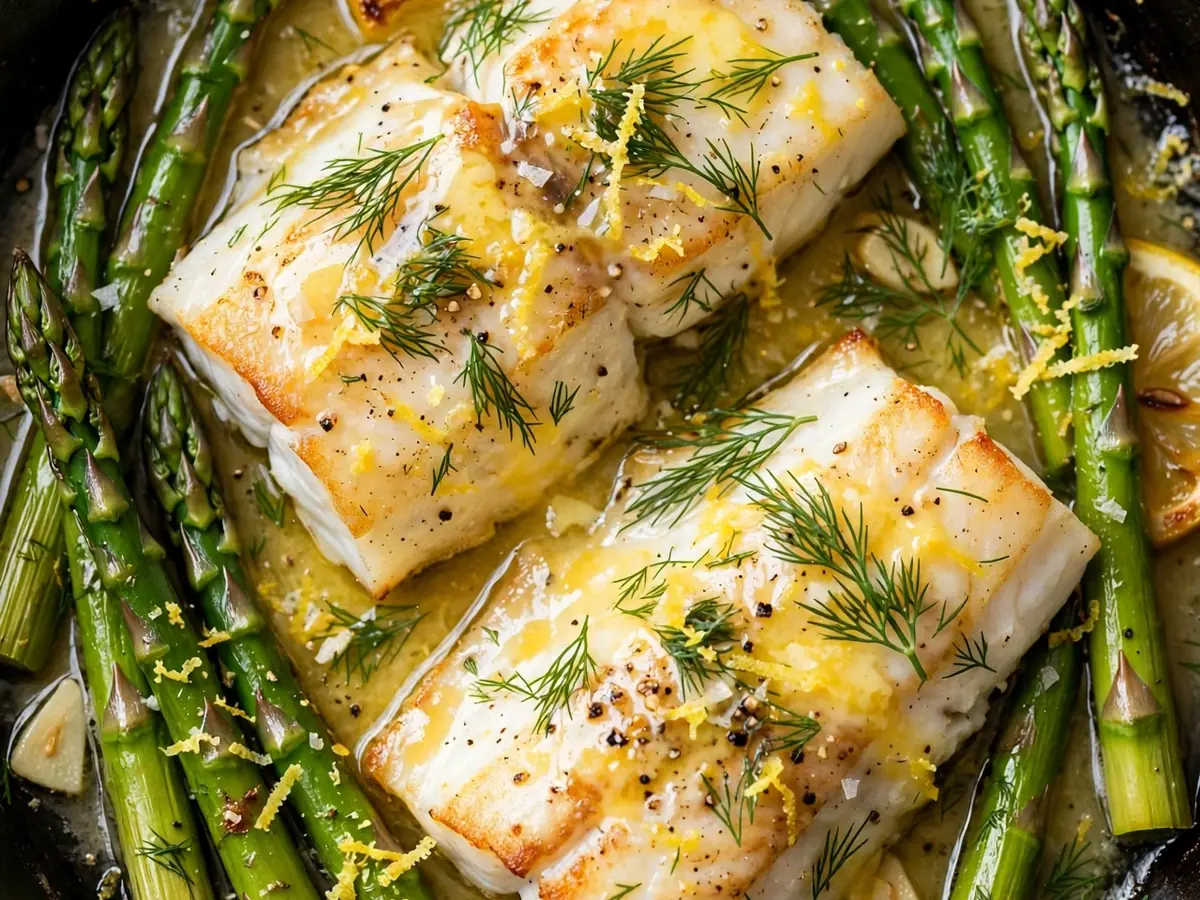
Weeknight cooking often asks for a meal that feels special but refuses to create a mountain of dishes. One-Pan Lemon Butter Cod with Asparagus answers that call with quiet confidence. The fish roasts gently in a bright, buttery sauce while the asparagus turns crisp-tender in the same oven, on the same pan, in under half an hour. There is no separate pot of sauce, no blanching water, and no last-minute juggling at the stove. Everything comes together on one rimmed baking sheet, which means more time at the table and less time scrubbing.
The appeal here goes beyond convenience. Cod is a lean, mild white fish with a delicate flake that pairs beautifully with citrus and butter. Asparagus, roasted at high heat, develops sweet, nutty edges while staying bright green. The lemon butter sauce is built directly in the pan, catching the savory juices the fish releases as it cooks. The result is a dish that tastes composed and intentional, even though the method is refreshingly simple. It works for a quick family dinner, a light weekend lunch, or a dinner party where you would rather spend time with guests than over a stove.
This article walks through the exact ingredients, the equipment that matters, step-by-step instructions with timing cues, and the small details that make the difference between good and excellent. It also covers practical substitutions for the fish, the fat, and the vegetables, plus storage guidance so leftovers stay enjoyable. Whether you are new to cooking fish or simply looking for a reliable one-pan formula, this recipe is designed to be repeated often and adjusted to your taste.
Why This One-Pan Method Works
Roasting fish and vegetables together on a single sheet pan succeeds because the components are timed to finish at roughly the same moment. Asparagus spears are thin and cook quickly at high heat, developing flavor through caramelization. Cod fillets are also fast-cooking, and they stay moist when roasted in a hot oven for a short window. The key is arranging the asparagus around the edges of the pan, where heat circulates more aggressively, and placing the cod in the center, where the environment is slightly gentler. This simple spatial logic prevents the fish from drying out before the asparagus is tender.
The lemon butter sauce is not made separately. Instead, butter is melted with lemon juice, lemon zest, garlic, and a pinch of seasoning, then spooned over the fish before roasting and again as a finishing glaze. As the butter melts into the pan, it mingles with the fish juices and the lightly charred asparagus, creating a pan sauce without any extra steps. A final squeeze of fresh lemon and a scattering of herbs brightens everything. This is the kind of cooking that rewards attention to a few small details rather than elaborate technique.
Ingredients
This recipe serves 4 people as a main course. Choose cod fillets of similar thickness so they cook evenly. If your fillets are very thick (over 1½ inches), you may need a few extra minutes; if they are thin (under ¾ inch), check them early. The asparagus should be medium thickness, roughly pencil-sized, so it roasts in the same window as the fish.
For the fish and asparagus:
- 4 cod fillets, skinless and boneless, about 6 ounces (170 grams) each, roughly 1 to 1¼ inches thick
- 1 pound (450 grams) fresh asparagus, woody ends trimmed
- 1 tablespoon olive oil, for the asparagus
- ½ teaspoon fine sea salt, divided, plus more to taste
- ¼ teaspoon freshly ground black pepper, divided, plus more to taste
For the lemon butter sauce:
- 4 tablespoons unsalted butter, melted
- 2 tablespoons fresh lemon juice (from about 1 medium lemon)
- 1 teaspoon finely grated lemon zest
- 2 garlic cloves, finely minced or grated
- ½ teaspoon honey or granulated sugar (optional, to balance acidity)
- ¼ teaspoon fine sea salt
- ¼ teaspoon freshly ground black pepper
- Pinch of red pepper flakes (optional)
For finishing:
- 1 tablespoon chopped fresh parsley or dill
- Lemon wedges, for serving
Equipment
- One large rimmed baking sheet, approximately 18 by 13 inches (half sheet pan). A rimmed pan is essential to contain the butter and juices.
- Parchment paper or a silicone baking mat (optional but helpful for cleanup)
- Small bowl for mixing the lemon butter sauce
- Whisk or small fork
- Pastry brush or spoon for drizzling
- Instant-read thermometer (optional, for checking fish doneness)
- Kitchen tongs or a thin spatula for serving
Preparation Instructions
- Preheat the oven and prepare the pan. Position a rack in the center of the oven and preheat to 425°F (220°C). Line the rimmed baking sheet with parchment paper if desired, or leave it bare for a slightly more browned finish on the asparagus. If using parchment, make sure it lies flat and does not overhang the edges.
- Prepare the asparagus. Rinse the asparagus and pat dry. Trim the woody ends by bending one spear near the base; it will snap naturally at the tough point. Use that spear as a guide to trim the rest. If the spears are thick, peel the lower third lightly with a vegetable peeler for a more tender texture. Spread the asparagus on the baking sheet, drizzle with the 1 tablespoon olive oil, and sprinkle with ¼ teaspoon of the salt and ⅛ teaspoon of the pepper. Toss gently with your hands or tongs to coat, then arrange the spears in a single layer around the perimeter of the pan, leaving a clear space in the center for the fish.
- Make the lemon butter sauce. In a small bowl, whisk together the melted butter, lemon juice, lemon zest, minced garlic, honey (if using), ¼ teaspoon salt, ¼ teaspoon pepper, and red pepper flakes (if using). Whisk until the mixture looks uniform. Taste and adjust: it should be bright, savory, and slightly rich. If it tastes too sharp, add a little more butter or a pinch more honey.
- Season and arrange the cod. Pat the cod fillets thoroughly dry with paper towels. Dry fish is essential for good browning and for preventing the butter sauce from becoming watery. Season both sides of each fillet with the remaining ¼ teaspoon salt and the remaining ⅛ teaspoon pepper. Place the fillets in the center of the pan, spacing them at least ½ inch apart so they roast rather than steam.
- Apply the first layer of sauce. Spoon or brush about half of the lemon butter sauce evenly over the cod fillets, reserving the rest for finishing. Use a light hand so the sauce coats the fish without pooling heavily around it. If any sauce lands on the asparagus, that is fine; it will add flavor.
- Roast. Transfer the pan to the preheated oven and roast for 12 to 15 minutes, depending on the thickness of the fillets. Begin checking at 10 minutes. The cod is done when it is opaque throughout and flakes easily with a fork, and the center reaches about 130°F to 135°F (54°C to 57°C) on an instant-read thermometer. The asparagus should be tender-crisp with lightly browned tips. If the asparagus is done before the fish, use tongs to move the spears to a serving platter and return the fish to the oven for a few more minutes.
- Finish with the remaining sauce. Remove the pan from the oven. Immediately spoon the reserved lemon butter sauce over the hot cod fillets, allowing it to melt into the fish and mingle with the pan juices. Squeeze a little fresh lemon over the asparagus if desired.
- Rest and serve. Let the pan rest for 2 to 3 minutes so the fish firms up slightly and the juices settle. Scatter the chopped parsley or dill over the fish and asparagus. Serve directly from the pan or transfer to plates, spooning the pan juices over each portion. Offer lemon wedges on the side.
Cooking Times and Doneness Cues
Oven temperatures and fillet thickness vary, so use these times as a guide rather than a rule. For cod fillets about 1 inch thick, expect 12 to 14 minutes at 425°F. For 1¼-inch fillets, 14 to 16 minutes. For thinner fillets around ¾ inch, start checking at 9 to 10 minutes. The most reliable cue is texture: perfectly cooked cod separates into large, moist flakes and looks glossy rather than chalky. An instant-read thermometer inserted into the thickest part should read 130°F to 135°F for a moist, tender result; the temperature will rise a few degrees as the fish rests. Asparagus is ready when a knife slides in easily near the base but the tip still holds its shape. If the tips are browning too quickly while the fish is still underdone, tent the pan loosely with foil for the remaining minutes.
Tips for the Best Result
- Dry the fish thoroughly. Moisture on the surface of the cod prevents browning and can make the butter sauce thin. Patting fillets dry is one of the highest-impact steps in the recipe.
- Keep fillet sizes uniform. Cod fillets vary widely in thickness. If one is much thicker than the others, either cut it in half horizontally or place it toward the outer edge of the center area for a little extra heat.
- Do not overcrowd the pan. If your baking sheet is smaller than a half sheet pan, use two pans or reduce the quantities. Crowding traps steam, which prevents browning and can make the asparagus limp.
- Reserve half the sauce for finishing. Sauce added before roasting mellows in flavor; sauce added after roasting keeps the lemon and garlic bright and fresh. This two-stage approach gives the best of both.
- Watch the garlic. Minced garlic in the butter sauce can burn if it sits on the hot pan surface. Spoon the sauce mainly over the fish, not directly onto the bare pan, to protect the garlic.
- Rest briefly. A short rest helps the fish hold together when served and allows the juices to redistribute.
Practical Substitutions
Fish: Cod is mild and firm enough to hold up in the oven. Good alternatives include haddock, pollock, halibut, or hake. Halibut is denser, so add 2 to 3 minutes to the roasting time. Salmon also works well; use fillets of similar thickness and roast for 12 to 15 minutes, though the flavor will be richer and more pronounced. Tilapia is thinner and cooks faster, so check at 8 to 10 minutes. Frozen cod can be used if fully thawed overnight in the refrigerator and patted dry before cooking.
Butter: For a dairy-free version, substitute a good-quality olive oil or a plant-based butter. Olive oil will not emulsify the same way, but it will still produce a flavorful, glossy sauce. Use 3 tablespoons of olive oil in place of the 4 tablespoons of butter and add an extra pinch of salt.
Sweetener: The honey or sugar is optional and mainly balances the lemon. If you prefer a sharper sauce, omit it. A small pinch of sugar can also help if your lemons are particularly acidic.
Asparagus: Green beans, broccolini, or thin broccoli florets can replace asparagus. Green beans and broccolini need about the same roasting time as asparagus; broccoli florets may need 2 to 3 minutes more, so give them a head start in the oven before adding the fish. Zucchini spears also work but release more moisture, so roast them on a separate section of the pan and drain any excess liquid before serving.
Herbs and aromatics: Fresh thyme, tarragon, or chives can stand in for parsley or dill. A little grated Parmesan over the asparagus during the last few minutes of roasting adds a savory note, though it is entirely optional.
Storage and Reheating Guidance
Store leftovers in an airtight container in the refrigerator for up to 2 days. Fish is best enjoyed fresh, but properly stored cod reheats acceptably. Separate the fish from the asparagus if possible, since the asparagus releases moisture that can make the fish soggy. To reheat, place the cod on a lightly oiled baking sheet and warm in a 325°F (165°C) oven for 6 to 8 minutes, until just heated through. Avoid the microwave for the fish, which can toughen the texture; the asparagus, however, can be gently reheated in the microwave or in a skillet over medium heat. Leftovers are excellent flaked into salads, folded into pasta, or served over rice with a squeeze of fresh lemon. Do not refreeze cooked fish that has already been frozen and thawed. For food safety, refrigerate leftovers within 2 hours of cooking and discard anything held longer than 2 days.
If you enjoy cod with bright, creamy sauces, you might also like this baked cod with coconut lemon sauce, which takes the citrus-and-cod pairing in a richer direction. For another one-pan-friendly comfort meal, the hearty lentil soup recipe is a satisfying cool-weather option, and more weeknight ideas are available in the Cookingenious blog.
Frequently Asked Questions
Can I use frozen cod for this recipe?
Yes, but thaw it completely overnight in the refrigerator first. Frozen cod releases a lot of water as it cooks, which can make the lemon butter sauce thin and prevent browning. After thawing, pat the fillets very dry with paper towels and proceed with the recipe as written. Avoid thawing in the microwave, as the edges can begin to cook unevenly.
How do I know when the cod is fully cooked without a thermometer?
Look for three cues: the flesh turns from translucent to opaque white throughout, the fillet flakes easily when gently pressed with a fork, and the center offers little resistance. The fish should look moist and glossy, not chalky or dry. If you have a thermometer, insert it into the thickest part; 130°F to 135°F (54°C to 57°C) is ideal for moist cod. Remember that the fish continues to cook slightly as it rests.
Can I prepare this dish ahead of time?
You can trim the asparagus, mince the garlic, zest and juice the lemon, and mix the lemon butter sauce up to a day in advance; store the sauce covered in the refrigerator and gently rewarm or whisk it before use, since the butter will solidify. Keep the fish refrigerated and season it just before roasting. The assembled pan should go into the oven immediately, as the salt and lemon can begin to affect the fish texture if it sits too long.
Why did my butter sauce turn out watery or separated?
The most common cause is wet fish or wet asparagus releasing moisture into the pan. Patting both dry before cooking helps significantly. Another cause is using cold butter that has not fully melted, or letting the sauce sit too long before whisking. If the sauce looks separated after roasting, simply stir the pan juices with a spoon and add a small knob of fresh butter, whisking until it melts into a smooth, glossy sauce.
What can I serve alongside this one-pan dish?
Because the pan already includes a vegetable, keep sides light. Steamed rice, couscous, or crusty bread works well for soaking up the lemon butter juices. A simple green salad or sliced tomatoes add freshness. For a heartier meal, serve with roasted baby potatoes, but note that potatoes need a longer roasting time, so start them in the oven 15 to 20 minutes before adding the fish and asparagus.
Can I make this recipe for a different number of servings?
Yes. The recipe scales easily as long as you do not overcrowd the pan. For two servings, use half the ingredients and a smaller rimmed pan or keep the full pan and leave space empty. For six servings, use two baking sheets rather than piling everything onto one, and rotate the pans halfway through roasting for even cooking. Keep the sauce proportions roughly the same per fillet, and check the fish a minute or two early the first time you scale the recipe.