Sheet Pan Teriyaki Salmon with Pineapple and Peppers
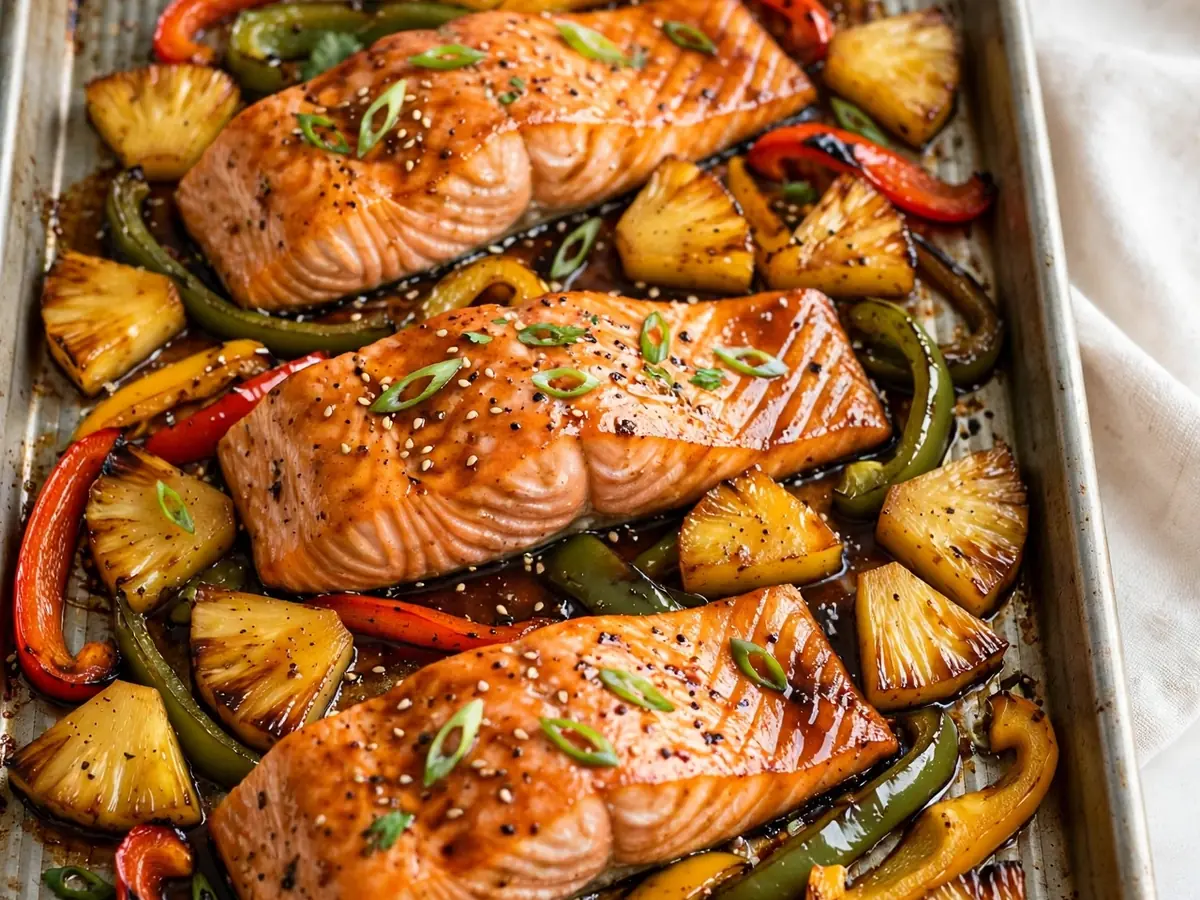
Weeknight dinners often fall into one of two camps: fast but forgettable, or delicious but demanding. Sheet pan teriyaki salmon with pineapple and peppers lands squarely in the sweet spot between the two. Everything roasts together on a single pan, the salmon stays moist and flaky under a glossy glaze, and the pineapple caramelizes into juicy golden edges while the peppers soften and sweeten. The result is a complete dinner that tastes like a takeout splurge but comes together with about fifteen minutes of hands-on work.
This recipe leans on a homemade teriyaki-style sauce built from soy sauce, brown sugar, rice vinegar, garlic, and ginger. It is thick enough to cling to the fish and vegetables without turning sticky or burnt, and it doubles as both a marinade and a finishing drizzle. The pineapple does double duty as well: its juices mingle with the sauce on the pan to create a light, fruity glaze that coats every bite. Serve it over steamed rice, tucked into lettuce cups, or alongside a simple cucumber salad. It is flexible, forgiving, and built for real kitchens on real schedules.
Why This Sheet Pan Dinner Works
Sheet pan cooking succeeds or fails on timing, and this recipe is designed around the fact that salmon and sturdy vegetables cook at different speeds. The peppers and pineapple go into the oven first so they can soften and pick up color. The salmon is added partway through, brushed with glaze, and finished under the broiler for a few minutes to deepen the crust. This staggered approach means nothing turns to mush and nothing stays raw.
The sauce is the second key. Many bottled teriyaki sauces are thin and sugary, which causes them to burn before the fish is cooked through. This version uses a small amount of cornstarch to build body, and it is applied in layers rather than all at once. A light coating goes on before roasting, a second brushing happens near the end, and any reserved sauce is drizzled at the table. Layering builds flavor without scorching.
Finally, the ingredient list is short and widely available. Fresh salmon fillets, a red bell pepper, a yellow or orange bell pepper, fresh pineapple chunks, scallions, and a handful of pantry staples are all you need. Frozen pineapple works in a pinch, though fresh gives the best caramelization. The whole dish comes together in under forty minutes, including prep.
Ingredients
For the teriyaki sauce:
- 1/3 cup low-sodium soy sauce
- 3 tablespoons packed light brown sugar
- 2 tablespoons rice vinegar
- 1 tablespoon toasted sesame oil
- 2 teaspoons grated fresh ginger
- 2 garlic cloves, finely grated or minced
- 1 teaspoon cornstarch
- 2 tablespoons cold water
For the sheet pan:
- 4 skin-on salmon fillets, about 6 ounces each and 1 to 1 1/4 inches thick
- 2 cups fresh pineapple chunks, cut into 1-inch pieces (about half a medium pineapple)
- 1 large red bell pepper, seeded and cut into 1-inch pieces
- 1 large yellow or orange bell pepper, seeded and cut into 1-inch pieces
- 1 small red onion, cut into 1-inch wedges
- 1 tablespoon neutral oil, such as avocado or canola
- 1/2 teaspoon kosher salt, plus more for the salmon
- 1/4 teaspoon freshly ground black pepper
- 4 scallions, thinly sliced on the bias, for serving
- 1 teaspoon toasted sesame seeds, for serving
- Steamed jasmine or short-grain rice, for serving (optional)
Yield: 4 servings. Active time: 15 minutes. Total time: 35 to 40 minutes.
Equipment
- One large rimmed sheet pan (18 by 13 inches), preferably light-colored aluminum so the glaze does not scorch
- Parchment paper or a silicone baking mat (optional but helpful for cleanup)
- Small saucepan
- Whisk
- Pastry brush or silicone basting brush
- Chef’s knife and cutting board
- Instant-read thermometer (recommended for checking the salmon)
- Mixing bowl for tossing the vegetables
Preparation Instructions
- Make the teriyaki sauce. In a small saucepan, whisk together the soy sauce, brown sugar, rice vinegar, sesame oil, ginger, and garlic. In a separate small bowl, stir the cornstarch into the cold water until smooth, then whisk that slurry into the saucepan. Set the pan over medium heat and bring to a gentle simmer, whisking often. Cook for 2 to 3 minutes, until the sauce thickens enough to coat the back of a spoon. Remove from the heat and let it cool for 5 minutes. Reserve about 3 tablespoons of the sauce in a small bowl for finishing; keep the rest for brushing the fish.
- Prepare the oven and pan. Position a rack in the upper third of the oven and preheat to 425°F (220°C). Line the sheet pan with parchment paper if using, or lightly grease it. A light-colored pan is ideal here because dark pans can overbrown the glaze.
- Season the vegetables and pineapple. In a mixing bowl, toss the pineapple chunks, both bell peppers, and the red onion with the neutral oil, 1/2 teaspoon salt, and black pepper until evenly coated. Spread the mixture in a single layer on the sheet pan, leaving four evenly spaced gaps where the salmon will go later. Roast on the upper rack for 10 minutes, until the vegetables just begin to soften and the pineapple releases some juice.
- Pat the salmon dry. While the vegetables roast, pat the salmon fillets thoroughly dry with paper towels, including the skin side. Moisture on the surface prevents browning. Season the flesh side lightly with salt. If your fillets are uneven in thickness, consider asking the fish counter for center-cut pieces of similar size so they cook evenly.
- Add the salmon to the pan. Remove the pan from the oven and carefully nestle each salmon fillet, skin side down, into one of the reserved gaps. Brush each fillet generously with the teriyaki sauce, using about half of the brushing sauce. Spoon a little of the pan juices over the vegetables if they look dry.
- Roast the salmon. Return the pan to the oven and roast for 8 to 10 minutes, until the salmon is nearly opaque and registers 120°F (49°C) on an instant-read thermometer inserted into the thickest part. Cooking time depends heavily on fillet thickness, so begin checking at 8 minutes.
- Brush and broil. Remove the pan from the oven and brush the salmon with the remaining brushing sauce. Switch the oven to broil and return the pan to the upper rack. Broil for 2 to 3 minutes, watching closely, until the glaze bubbles and darkens slightly and the salmon reaches 125°F to 130°F (52°C to 54°C) for medium. Pull the pan the moment the glaze looks lacquered; broilers vary widely, so stay by the oven.
- Rest and finish. Let the pan rest for 3 to 5 minutes. The salmon will carry over to a safe, flaky 130°F to 135°F (54°C to 57°C). Drizzle the reserved 3 tablespoons of sauce over the salmon and vegetables, then scatter the sliced scallions and sesame seeds over the top. Serve immediately, with steamed rice if desired.
Cook’s Tips for the Best Result
- Dry fish browns better. Patting the salmon completely dry is the single most effective step for getting a caramelized glaze instead of a pale, steamed surface.
- Cut vegetables evenly. One-inch pieces ensure the peppers and pineapple finish at the same time. If your pieces are uneven, the smaller ones will char before the larger ones soften.
- Do not crowd the pan. Leave space between pieces so heat circulates. If your pan is smaller than 18 by 13 inches, roast the vegetables in two batches or use two pans.
- Watch the broiler. Broiler elements run hot and unevenly. Rotate the pan halfway through broiling if your oven browns one side faster.
- Reserve sauce before brushing. Any sauce that has touched raw fish should not be served at the table. Set aside the finishing drizzle before you begin brushing.
- Use thick fillets. Thin tail pieces overcook quickly. Center-cut fillets about an inch thick give the best margin for error.
Practical Substitutions
Fish: Cod, halibut, or arctic char can replace salmon. Thicker white fish may need 2 to 4 extra minutes; adjust by checking the internal temperature rather than the clock. Shrimp also works but should be added later, roasting for only 5 to 6 minutes total.
Pineapple: Canned pineapple chunks packed in juice, well drained and patted dry, are a convenient substitute. Avoid pineapple in heavy syrup, which burns. Frozen pineapple chunks should be thawed and drained thoroughly before roasting.
Soy sauce: Tamari makes the dish gluten-free. Coconut aminos work as a soy-free option, though the sauce will be slightly sweeter and less salty, so taste and adjust.
Sweetener: Honey or maple syrup can stand in for brown sugar, though the glaze will brown a bit faster under the broiler. Reduce the broiling time by 30 seconds if using honey.
Vegetables: Green beans, snap peas, or thick-sliced zucchini can replace the peppers, but adjust the initial roast time: green beans need about 12 minutes, while zucchini needs only 8.
Heat: Add 1/4 to 1/2 teaspoon of red pepper flakes to the sauce for a spicy version, or finish with a drizzle of sriracha.
Storage and Reheating Guidance
Store leftovers in an airtight container in the refrigerator for up to 3 days. Keep the salmon and vegetables together; the pineapple juices will continue to flavor the fish. Reheat gently in a covered skillet over medium-low heat with a splash of water, or in a 300°F (150°C) oven for 8 to 10 minutes, until just warmed through. Avoid the microwave at full power, which can toughen salmon quickly; if using it, heat in 30-second bursts at 50 percent power.
This dish is best fresh, but leftovers make excellent cold salmon salad: flake the fish, chop the vegetables, and toss with a little extra teriyaki sauce or a squeeze of lime over greens. The cooked vegetables and pineapple also reheat well on their own and can be folded into rice bowls or grain salads. Do not refreeze cooked salmon that has already been frozen and thawed.
For more weeknight sheet pan inspiration, browse the Cookingenious blog, where you will find other one-pan dinners built around the same practical timing approach. If you enjoy the smoky, charred flavors of sheet pan cooking, our sheet pan chicken fajitas recipe uses a similar stagger-and-broil method with a different spice profile. And for a cozy, make-ahead meal to round out the week, this hearty lentil soup freezes beautifully and pairs well with crusty bread.
Frequently Asked Questions
Can I marinate the salmon in the teriyaki sauce ahead of time?
Yes, but keep it brief. Marinate the salmon in half of the sauce for no more than 30 minutes in the refrigerator. Longer than that, the sugar and salt begin to break down the flesh, making it mushy and causing it to release excess liquid on the pan. If you want to prep ahead, make the sauce up to 5 days in advance and store it covered in the refrigerator, then brush it on just before roasting.
How do I know when the salmon is done without a thermometer?
Look for three cues: the flesh turns from translucent to opaque, the thickest part flakes easily when nudged with a fork, and the white albumin (the milky protein) has just begun to appear at the edges. The fish should feel firm but still yield slightly when pressed. For reference, medium salmon is ready at 125°F to 130°F (52°C to 54°C) and well-done at 145°F (63°C). A thermometer remains the most reliable guide, especially with thick fillets.
Why did my teriyaki glaze burn under the broiler?
Sugar-heavy glazes brown very quickly under direct heat. The most common causes are applying too much sauce before broiling, using a dark sheet pan that absorbs extra heat, or leaving the pan under the broiler too long without watching. Brush on a thin layer, use a light-colored pan, and check the fish every 30 seconds once broiling begins. If the glaze starts to darken too fast, move the pan to a lower rack or tent it loosely with foil.
Can this recipe be made with frozen salmon?
Yes. Thaw frozen fillets overnight in the refrigerator, then pat them very dry before seasoning. Do not roast salmon from frozen in this recipe; the vegetables would overcook while the fish catches up. Thawing fully also allows the glaze to adhere properly and helps the salmon cook evenly.
What should I serve with sheet pan teriyaki salmon?
Steamed jasmine rice is the classic pairing because it soaks up the extra sauce. For lighter options, try coconut rice, cauliflower rice, or a bed of baby spinach that wilts under the warm fish and vegetables. A crisp cucumber salad with rice vinegar and sesame oil, or steamed edamame with flaky salt, adds contrast without extra effort. The dish is also excellent tucked into warm tortillas or lettuce cups.
Can I double this recipe for a larger crowd?
You can, but use two sheet pans rather than crowding one. Divide the vegetables and salmon evenly between the pans and rotate their positions in the oven halfway through roasting. Doubling on a single pan traps steam and prevents browning, and the extra moisture can make the salmon soggy. Stick to one pan per four servings for the best texture.