Pear and Cranberry Crisp: Cozy Autumn Dessert
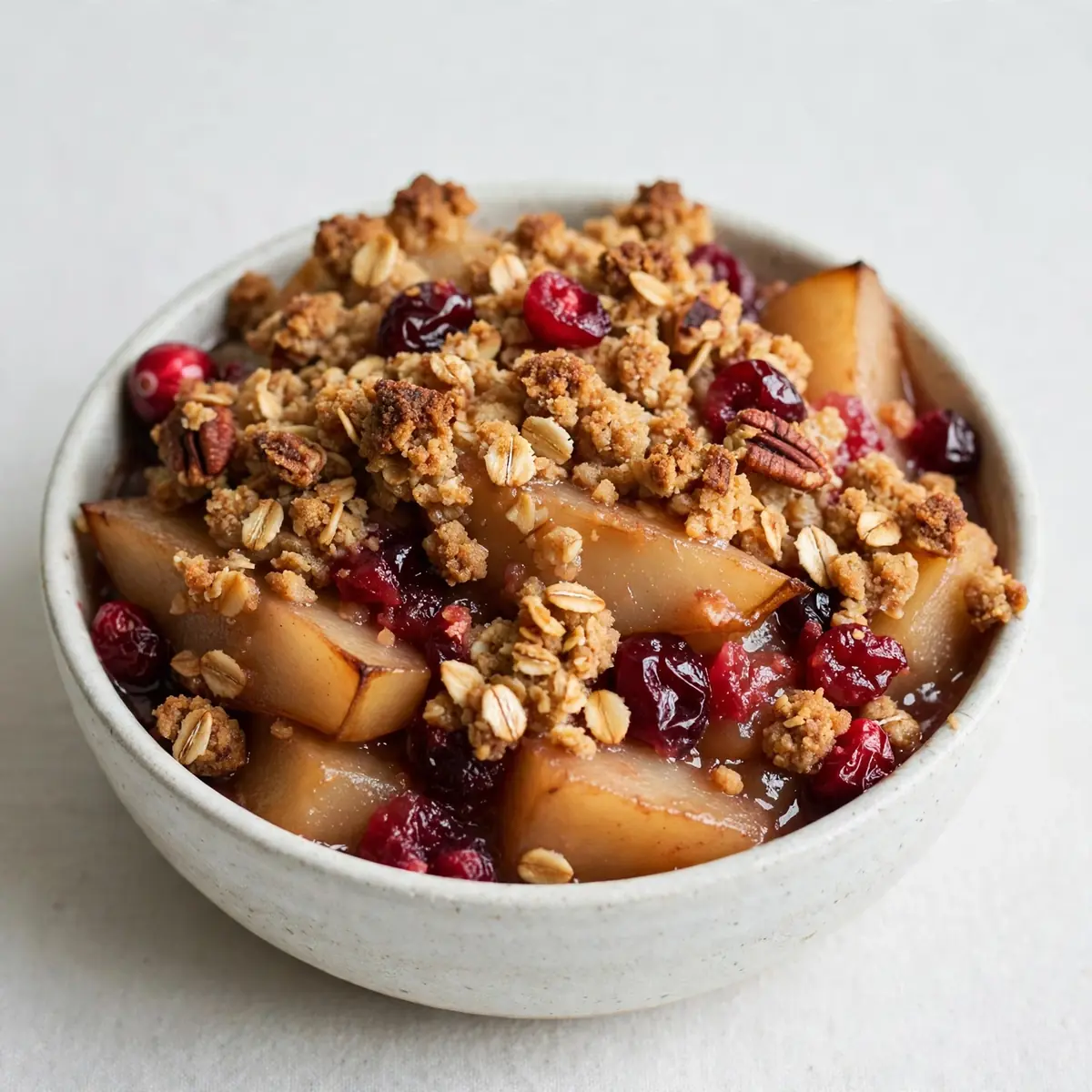
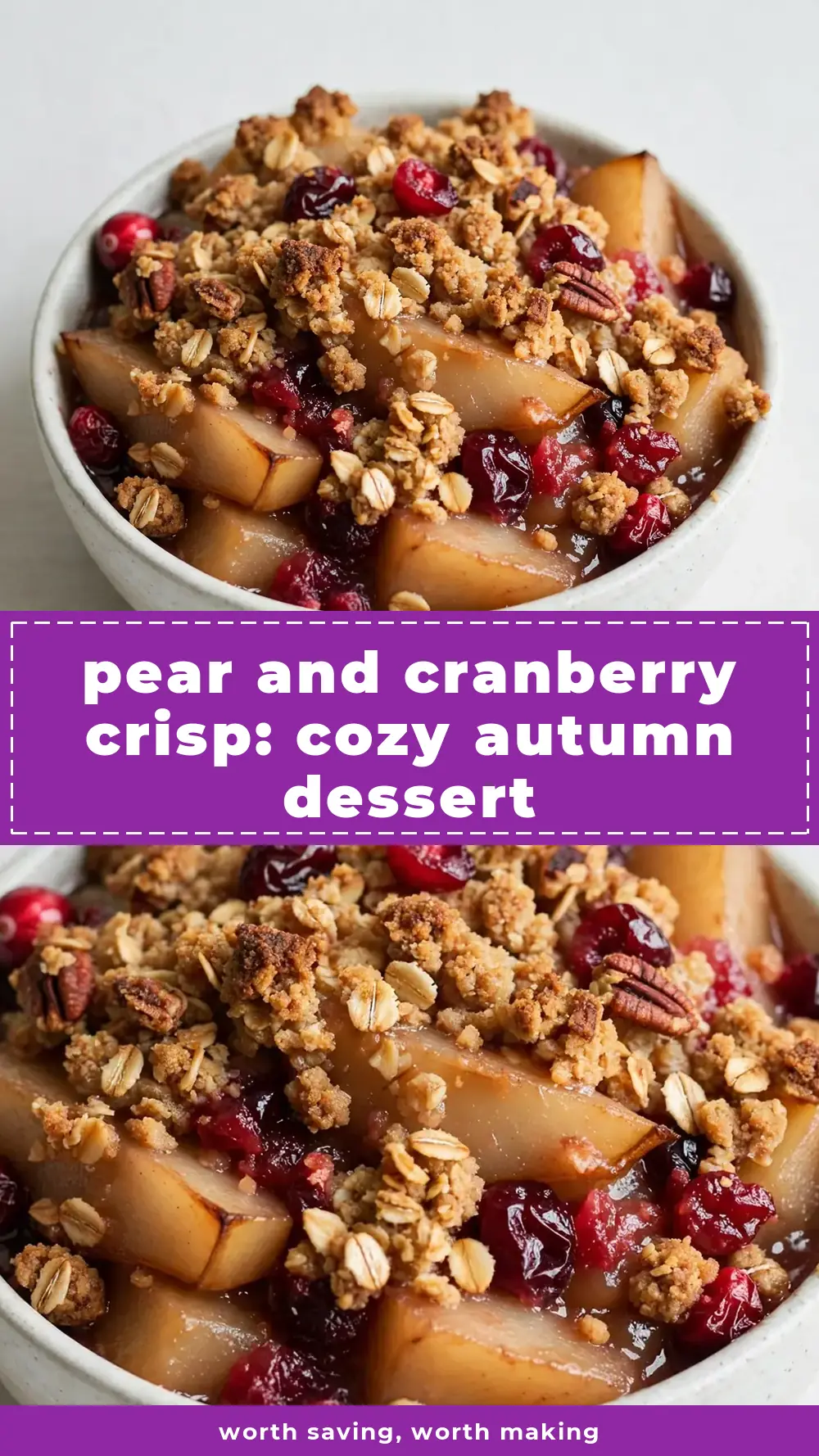
The first time you pull a pear and cranberry crisp from the oven, you notice how the ruby-red cranberry juice bubbles up through the golden oat topping, staining the pears a deep pink. That contrast—tart, almost sharp cranberries against sweet, buttery pears, all under a crunchy, buttery crumble—is what makes this dessert so memorable. It requires no rolling pin, no icing, and no complicated techniques, just a single baking dish and a willingness to let the fruit do the talking.
Recipe Overview
- Prep time: 20 minutes
- Cook time: 40–45 minutes
- Total time: 1 hour 5 minutes
- Servings: 8
- Difficulty: Easy
Why You’ll Love This Pear and Cranberry Crisp
- Bold flavour contrast: Sweet, juicy pears balance the sharp, tart pop of cranberries, creating a dessert that isn’t cloying.
- Texture variety in every bite: A crunchy, buttery oat topping sits over a soft, jammy fruit base that holds its shape without turning mushy.
- No specialist equipment needed: You don’t need a stand mixer, food processor, or pastry cutter—just a bowl, a spoon, and a baking dish.
- Works with fresh or frozen cranberries: Frozen cranberries cook down just as well and require no thawing, making this recipe available all year round.
- Simple, honest ingredients: Nothing fancy—just fruit, oats, flour, butter, and sugar—yet the result tastes far more complex than its parts suggest.

Ingredients You’ll Need
- 1 kg ripe but firm pears (about 5–6 medium pears)
- 200 g fresh or frozen cranberries
- 150 g caster sugar (for the fruit filling)
- 2 tablespoons cornflour
- 1 tablespoon lemon juice
- 1 teaspoon vanilla bean paste or extract
- ¼ teaspoon ground cinnamon
- Pinch of fine sea salt
- 150 g plain flour
- 120 g rolled oats (not instant)
- 120 g light brown sugar, firmly packed
- ½ teaspoon ground ginger
- 120 g cold unsalted butter, cut into small cubes
Tip: Choose pears that yield slightly at the neck but remain firm in the body—overripe pears will collapse into mush during baking, while rock-hard ones won’t soften enough.
How to Make Pear and Cranberry Crisp
- Preheat the oven and prepare the baking dish. Set your oven to 180°C (160°C fan/gas mark 4). Lightly butter a 2-litre baking dish (roughly 28 x 18 cm). The butter helps prevent sticking and adds a subtle richness to the edges.
- Prep the pears. Peel the pears, then cut them into quarters and remove the cores. Slice each quarter into 1.5 cm chunks. You want pieces thick enough to survive the baking time but small enough to meld with the cranberries. As you cut, you should hear the knife crunch through the crisp flesh.
- Make the fruit filling. In a large mixing bowl, combine the pear chunks, cranberries, caster sugar, cornflour, lemon juice, vanilla paste, cinnamon, and salt. Stir gently with a wooden spoon until the sugar clings to every fruit piece. The cornflour will create a pale, dusty coating at first—this disappears as the fruit releases its juice during baking, thickening the syrup.
- Build the crisp topping. In a separate bowl, whisk together the plain flour, rolled oats, brown sugar, and ground ginger. Drop in the cold butter cubes. Using your fingertips, rub the butter into the dry mixture until it resembles coarse, damp breadcrumbs. Some larger pea-sized butter lumps are fine—they create crunchy clusters as the topping bakes. You should see specks of butter still visible throughout.
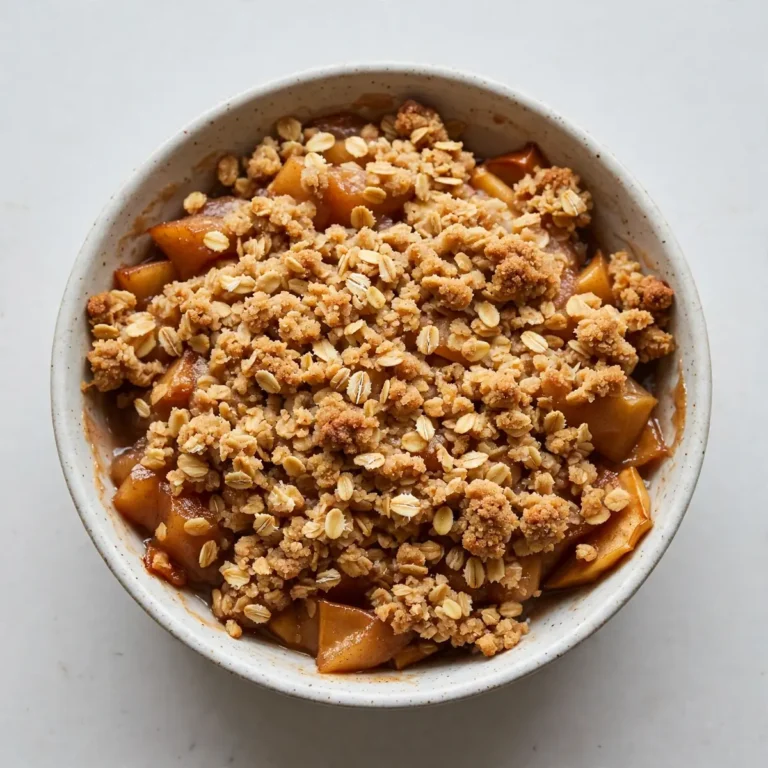
- Layer the crisp. Tip the fruit mixture into the prepared baking dish and spread it into an even layer. Spoon the oat topping evenly over the fruit, taking care not to press it down. A loose, craggy surface bakes into a more textured, golden crust.
- Bake until bubbling and golden. Place the dish on a baking tray to catch any drips. Bake for 40–45 minutes. At the 20-minute mark, the topping will have turned a pale honey colour and the cranberries will start to pop. By 35 minutes, you’ll hear the filling bubbling audibly and see ruby-coloured syrup seeping around the edges. The topping should be deep golden brown and feel firm to a light touch.
- Rest before serving. Remove the crisp from the oven and let it stand for at least 15 minutes. This resting period allows the juices to thicken and settle; a crisp served piping hot from the oven will be too runny. The surface will appear slightly sunken in patches where bubbles have burst, which is exactly what you want.
Practical Tips
- Don’t undercook the pears: Pears need enough time to soften fully. If you pull the crisp out too early, the pear chunks will remain firm and crunchy in the centre. Test with a skewer at 40 minutes—it should slide through a pear piece without resistance. The texture should be tender but not falling apart.
- Use cold butter for the topping: Warm, softened butter will melt into the flour and oats before it reaches the oven, creating a dense, greasy paste instead of a crumbly topping. Keep your butter in the fridge until the moment you cube it, and work quickly with your fingertips so the butter stays in distinct flecks.
- Taste the cranberries before adding sugar: Frozen cranberries are often more tart than fresh ones because they’re picked earlier. If your cranberries make your mouth pucker fiercely, add an extra tablespoon of caster sugar to the fruit filling. If they taste only mildly sharp, stick with the recipe amount—the contrast is essential.
- Cut the pears uniformly: If you cut some slices thin and others thick, the thin ones will dissolve into mush while the thick ones stay undercooked. Aim for chunks around 1.5 cm on each side. This size ensures that every piece cooks evenly and retains a subtle bite.
- Let the crisp cool uncovered: Covering the dish while it rests traps steam, which will soften the oat topping into a soggy blanket. Leave the baking dish on a wire rack completely uncovered. The topping will stay crunchy for hours, though the crisp is best eaten on the day it’s baked.
- Adjust the sweetness to your fruit: Extremely ripe pears will contribute more natural sugar to the filling. If your pears smell intensely sweet and feel very soft at the neck, reduce the caster sugar by 10–20 g. If they’re on the firm and less aromatic side, use the full amount. The cranberries will always bring acidity, so err on the side of slightly sweeter rather than overly tart.
Equipment You’ll Need
- Large mixing bowl and medium mixing bowl
- Sharp knife and cutting board
- Wooden spoon or spatula
- 2-litre baking dish (about 28 x 18 cm)
- Baking tray (to catch drips)
- Measuring spoons and kitchen scales
- Vegetable peeler
Delicious Variations to Try
- Spiced Pear and Cranberry Crisp: Add ½ teaspoon of ground cardamom and ¼ teaspoon of ground white pepper to the fruit filling. The cardamom brings a floral, almost citrus note that pairs surprisingly well with pears, while the white pepper adds a gentle warmth without the visual flecks of black pepper.
- Vegan Option: Replace the butter in the topping with 120 g of cold solid coconut oil or a good-quality vegan block butter. Use the same rubbing-in method. The coconut oil version will produce a slightly crisper, more brittle topping with a faint coconut fragrance that complements the cranberries. Check that your brown sugar is vegan-friendly.
- Apple and Cranberry Hybrid: Swap half the pears for the same weight of Bramley or Granny Smith apples. Peel and chop the apples into similar 1.5 cm chunks. Apples hold their shape more firmly than pears, so the filling will have a chunkier, more textured consistency. Increase the lemon juice by 1 teaspoon to balance the apple’s lower acidity.
What to Serve With Pear and Cranberry Crisp
- A generous dollop of thick double cream or clotted cream, whose richness cuts through the tart cranberries.
- Vanilla ice cream that melts slowly into the warm fruit juices—choose a good-quality Madagascan vanilla for the cleanest flavour.
- Crème fraîche for a tangier, lighter alternative that echoes the cranberry’s sharpness.
- A drizzle of cold pouring custard, especially one infused with a vanilla pod, for a more traditional British pudding feel.
Frequently Asked Questions
Pear and Cranberry Crisp
Ingredients
Method
-
Preheat the oven and prepare the baking dish. Set your oven to 180°C (160°C fan/gas mark 4). Lightly butter a 2-litre baking dish (roughly 28 x 18 cm). The butter helps prevent sticking and adds a subtle richness to the edges.
-
Prep the pears. Peel the pears, then cut them into quarters and remove the cores. Slice each quarter into 1.5 cm chunks. You want pieces thick enough to survive the baking time but small enough to meld with the cranberries. As you cut, you should hear the knife crunch through the crisp flesh.
-
Make the fruit filling. In a large mixing bowl, combine the pear chunks, cranberries, caster sugar, cornflour, lemon juice, vanilla paste, cinnamon, and salt. Stir gently with a wooden spoon until the sugar clings to every fruit piece. The cornflour will create a pale, dusty coating at first—this disappears as the fruit releases its juice during baking, thickening the syrup.
-
Build the crisp topping. In a separate bowl, whisk together the plain flour, rolled oats, brown sugar, and ground ginger. Drop in the cold butter cubes. Using your fingertips, rub the butter into the dry mixture until it resembles coarse, damp breadcrumbs. Some larger pea-sized butter lumps are fine—they create crunchy clusters as the topping bakes. You should see specks of butter still visible throughout.
-
Layer the crisp. Tip the fruit mixture into the prepared baking dish and spread it into an even layer. Spoon the oat topping evenly over the fruit, taking care not to press it down. A loose, craggy surface bakes into a more textured, golden crust.
-
Bake until bubbling and golden. Place the dish on a baking tray to catch any drips. Bake for 40–45 minutes. At the 20-minute mark, the topping will have turned a pale honey colour and the cranberries will start to pop. By 35 minutes, you’ll hear the filling bubbling audibly and see ruby-coloured syrup seeping around the edges. The topping should be deep golden brown and feel firm to a light touch.
-
Rest before serving. Remove the crisp from the oven and let it stand for at least 15 minutes. This resting period allows the juices to thicken and settle; a crisp served piping hot from the oven will be too runny. The surface will appear slightly sunken in patches where bubbles have burst, which is exactly what you want.
Notes
This pear and cranberry crisp is one of those desserts that feels both satisfying to make and genuinely impressive to serve. The combination of soft, caramelised pears and tart cranberries under a buttery, cluster-filled topping is a reliable end to any meal, whether you’re cooking for a Sunday family dinner or a midweek treat. If you give it a go, let us know in the comments how your pears held up, whether you tried any of the variations, and what you served alongside it.