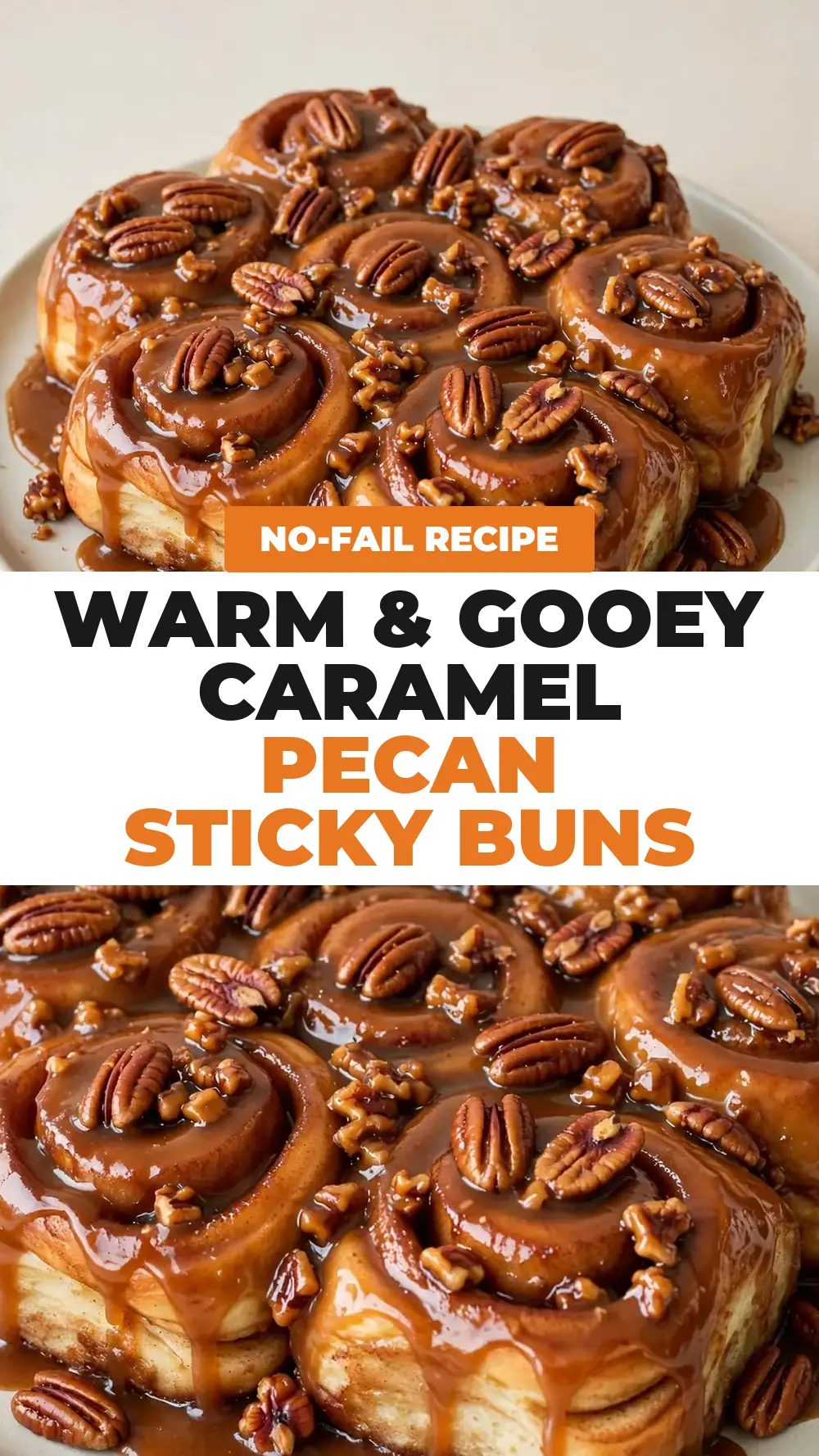
Warm & Gooey Caramel Pecan Sticky Buns
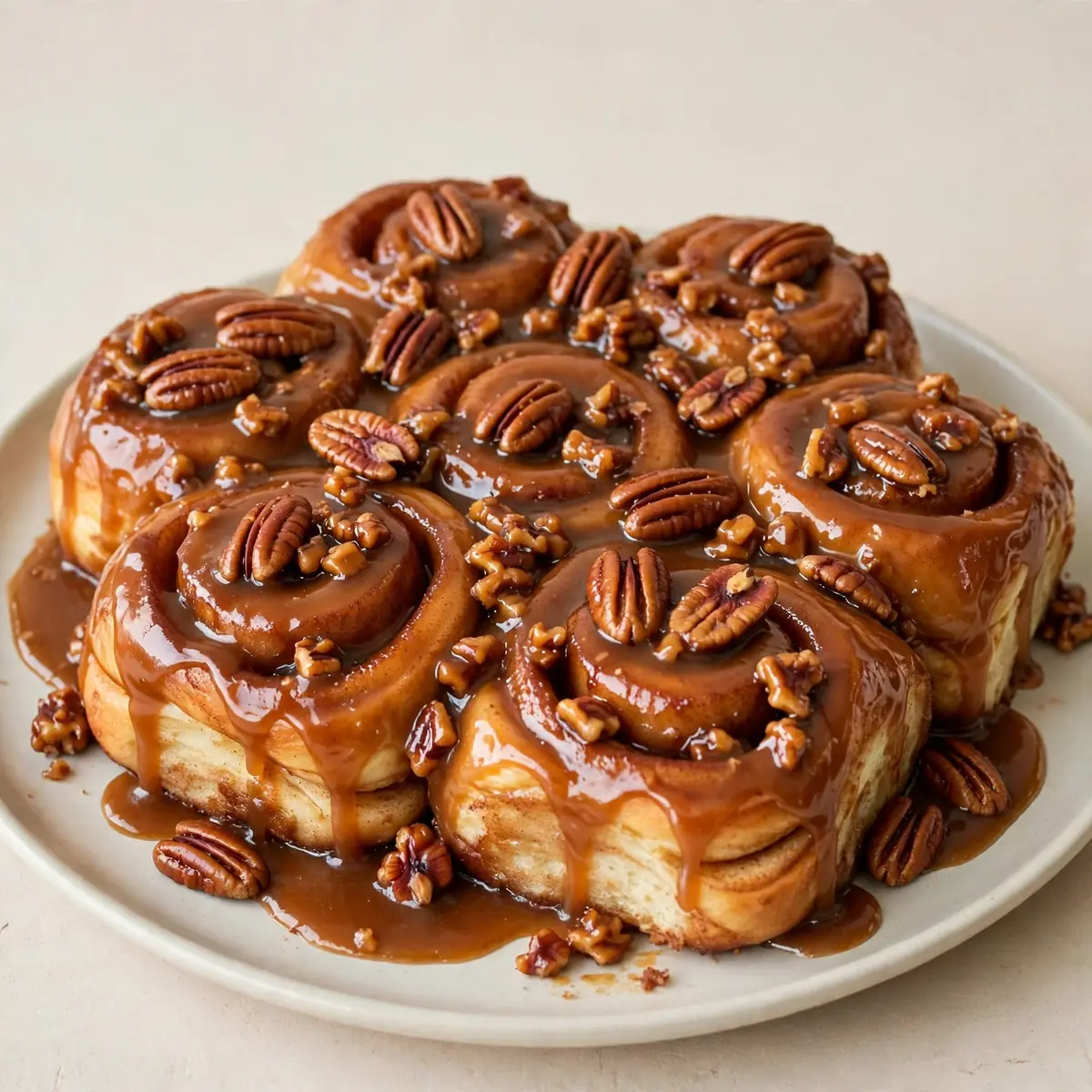
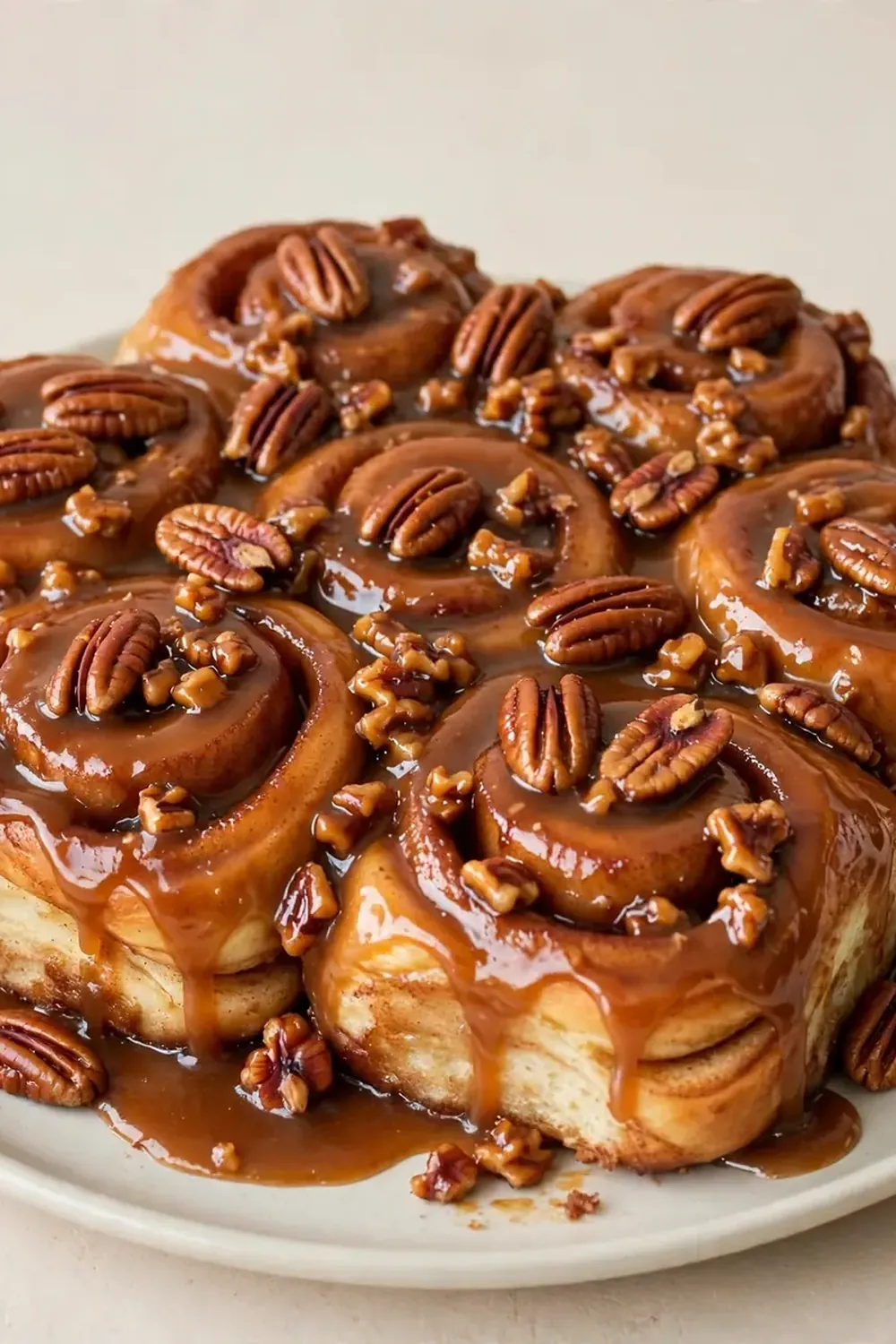
Every good sticky bun walks a fine line between a tender, yeasted dough and a sticky-sweet glaze that clings to every crevice. These caramel pecan sticky buns lean heavily into the brown-sugar caramel side of things, with a deep amber glaze studded with toasted pecans that turns each bite into a miniature celebration of butter and crunch.
Recipe Overview
- Preparation Time: 2 hours 30 minutes (including rising time)
- Cooking Time: 25–28 minutes
- Total Time: Approximately 3 hours
- Servings: 9 buns (3×3 arrangement in a 9-inch square tin)
- Difficulty: Intermediate
Why You’ll Love These Caramel Pecan Sticky Buns
- The buns emerge from the oven with a glossy, bubbling caramel topping that soaks into the dough, creating a tender crumb with a sticky, almost fudgy edge.
- Toasted pecans add a nutty crunch that contrasts beautifully with the soft, pull-apart texture of the yeast dough.
- The caramel is made from scratch with butter, brown sugar, and a touch of double cream — no tinned sauces or artificial shortcuts here.
- The dough is enriched with eggs and butter, giving it a brioche-like softness that holds its shape without turning dense.
- You can prepare the buns the night before and bake them fresh in the morning, making them ideal for a brunch gathering or a weekend treat, much like a Pear and Cranberry Crisp: Cozy Autumn Dessert.cookingenious.com/mouthwatering-cinnamon-sugar-churros-with-chocolate/”>Mouthwatering Cinnamon Sugar Churros with Chocolate.
Ingredients You’ll Need
For the Dough
- 500 g strong white bread flour
- 7 g sachet fast-action dried yeast (1 sachet)
- 50 g caster sugar
- 1 tsp fine sea salt
- 250 ml whole milk, lukewarm
- 2 large eggs, at room temperature
- 75 g unsalted butter, softened and cut into small cubes
For the Caramel Pecan Topping
- 120 g unsalted butter, plus extra for greasing
- 150 g light brown sugar, firmly packed
- 3 tbsp golden syrup (or light corn syrup if outside the UK)
- 80 ml double cream
- ½ tsp flaky sea salt
- 130 g pecan halves, roughly chopped and toasted
For the Cinnamon Filling
- 60 g unsalted butter, very soft
- 80 g light brown sugar, firmly packed
- 2 tsp ground cinnamon
- ¼ tsp freshly grated nutmeg (optional, but recommended)
Tip: Toast the pecans in a dry frying pan over a medium heat for 3–4 minutes, shaking the pan often, until they smell fragrant and deepen slightly in colour. Set them aside to cool completely before using — warm nuts can cause the caramel to seize.
How to Make Caramel Pecan Sticky Buns
- Make the dough: In a large mixing bowl, whisk the flour, yeast, sugar, and salt together. Pour in the lukewarm milk and add the eggs. Mix with your hands or a dough scraper until a shaggy, rough dough forms. The dough will feel fairly wet and sticky at this stage — that’s exactly what you want.
- Knead in the butter: Turn the dough onto a lightly floured surface and knead for 5 minutes until it becomes smoother and less tacky. Start adding the softened butter cubes a few at a time, kneading well after each addition. The dough will become very soft, almost silky, and will feel pliable rather than elastic. This takes about 8–10 minutes total. When fully kneaded, the dough should be smooth, supple, and no longer sticky to the touch.
- First rise: Shape the dough into a neat ball and place it in a lightly oiled bowl. Cover with cling film or a damp tea towel and leave in a warm, draught-free spot for 1 hour to 1 hour 15 minutes, until the dough has doubled in size. The surface should look puffed and slightly domed, and when you press a finger gently into the side, the indent should stay rather than spring back.
- Prepare the caramel topping: While the dough rises, make the caramel. Melt the 120 g butter in a medium saucepan over a medium heat. Add the brown sugar and golden syrup, stirring constantly with a wooden spoon until the mixture is smooth and bubbling — about 2 minutes. Remove from the heat and slowly pour in the double cream, stirring all the while. The mixture will hiss and steam. Add the flaky sea salt and stir. Pour this caramel into a greased 9-inch square baking tin (or a round 23 cm cake tin), tilting the tin to coat the base evenly. Scatter the toasted pecans over the caramel in an even layer. Set aside to cool while you shape the buns.
- Roll and fill: On a lightly floured surface, roll the risen dough into a rectangle about 35 cm by 25 cm, with the longer edge facing you. The dough should be even in thickness — about 1 cm thick. Spread the 60 g of very soft butter across the surface, leaving a 2 cm strip along the far edge unbuttered. Mix the brown sugar, cinnamon, and nutmeg together, then sprinkle this mixture evenly over the buttered area, pressing it down gently with your palm.
- Shape the buns: Starting from the buttered edge closest to you, roll the dough away from you into a tight, even log. The seam should meet the unbuttered strip at the far edge — pinch the seam gently to seal. The log should feel firm and uniform. Using a sharp serrated knife or a length of unflavoured dental floss, cut the log into 9 equal slices, each about 3½–4 cm thick. Arrange the slices cut-side up in the prepared tin, nestled snugly into the caramel and pecans. They should touch each other but not be crammed too tightly.
- Second rise: Cover the tin loosely with oiled cling film or a tea towel and let the buns rise for 30–40 minutes. They should puff up visibly and press against one another. The dough will feel airy and soft when gently poked, and the buns will have increased in size by about half as much again. If you plan to bake the next day, place the covered tin in the fridge at this stage for up to 12 hours. Bring back to room temperature for 45 minutes before baking.
- Bake: Preheat your oven to 180°C (fan-assisted) or 190°C (conventional). Bake the buns on the middle shelf for 25–28 minutes. The tops should turn a deep golden brown, and the caramel will be bubbling up around the edges of the tin. If you lift the edge of a bun with a fork, the underside should look sticky and amber-coloured, not pale. The internal temperature should reach 85°C if you have a probe thermometer.
- Cool and invert: Remove the tin from the oven and place it on a wire rack for exactly 5 minutes — no longer, or the caramel will set and stick to the tin. Place a large plate or a flat serving board over the top of the tin, then carefully invert the whole thing in one swift, confident motion. Lift the tin away slowly. The buns should release cleanly, with the caramel pooling over the tops and pecans studding every surface. Leave them to cool for at least 10 minutes before serving, though they are at their absolute best eaten warm.
Practical Tips
- Use a kitchen thermometer for the milk: Yeast is a living organism and is sensitive to temperature. If the milk is too hot (above 50°C), it will kill the yeast, and the dough will not rise. If it is too cold, the yeast will activate very slowly. Aim for 37–40°C — just above body temperature. A quick finger test: the milk should feel comfortably warm, not hot, when you dip your fingertip in.
- Do not skip the double cream in the caramel: The cream adds richness and prevents the caramel from turning into a hard, brittle toffee after baking. It also gives the glaze a luscious, pourable consistency that soaks into the buns rather than sitting on top like a hard shell. If you substitute with milk, the caramel will be thinner and less indulgent.
- Let the dough rest after kneading if it fights back: Enriched doughs with butter and eggs can feel tight and resistant. If the dough seems difficult to roll out after the first rise, cover it with a tea towel and let it rest for 10 minutes. This relaxes the gluten structure and makes the rolling process much smoother, preventing the dough from springing back into a smaller shape.
- Cut the buns with floss for clean slices: Using a knife can squish the soft dough and compress the layers, leading to uneven buns. A piece of unflavoured dental floss slid under the log, crossed over the top, and pulled tight cuts through cleanly without distorting the shape. This small trick makes a noticeable difference in the final appearance.
- Watch the caramel during the inversion step: The timing of the 5-minute cooling window is critical. If you flip the buns too soon, the caramel will be too runny and will flood the plate rather than coating the buns. If you wait too long, the caramel will set and the buns will stick stubbornly to the tin. Set a timer as soon as the tin leaves the oven — do not rely on guesswork.
Equipment You’ll Need
- 9-inch square baking tin or 23 cm round cake tin (at least 5 cm deep)
- Large mixing bowl
- Medium saucepan
- Wooden spoon or silicone spatula
- Rolling pin
- Sharp serrated knife or unflavoured dental floss
- Wire cooling rack
- Cling film or a clean tea towel for covering
- Kitchen thermometer (helpful but not essential)
Delicious Variations to Try
- Spiced Chai Version: Add 1 teaspoon of ground cardamom, ½ teaspoon of ground ginger, and ¼ teaspoon of ground cloves to the cinnamon filling. The warm, aromatic spices pair beautifully with the caramel and pecans, giving the buns a more complex, festive flavour.
- Vegan Option: Substitute the butter with a high-quality plant-based block butter (not spreadable margarine), the milk with unsweetened oat or soya milk, the eggs with 2 flax eggs (2 tbsp ground flaxseed mixed with 6 tbsp water, left to gel for 10 minutes), and the double cream with full-fat coconut cream. The buns will be slightly less tender but still deliciously sticky and rich.
- Chocolate Caramel Pecan Buns: Sprinkle 50 g of finely chopped dark chocolate (70% cocoa) over the cinnamon filling before rolling. The melted chocolate seeps into the dough and mingles with the caramel, creating a decadent, almost pudding-like texture. Reduce the cinnamon to 1 teaspoon to let the chocolate shine.
What to Serve With Caramel Pecan Sticky Buns
- A steaming mug of black coffee or a flat white — the bitterness cuts through the sweetness of the caramel beautifully.
- A small glass of cold milk for a classic, comforting pairing that highlights the soft, bready texture.
- Fresh berries or a handful of sliced apples on the side to add a tart, fruity contrast to the sticky glaze.
- A dollop of crème fraîche or Greek yoghurt for those who want a tangy, creamy counterpoint to the richness.
Frequently Asked Questions
caramel pecan sticky buns
Ingredients
Method
-
Make the dough: In a large mixing bowl, whisk the flour, yeast, sugar, and salt together. Pour in the lukewarm milk and add the eggs. Mix with your hands or a dough scraper until a shaggy, rough dough forms. The dough will feel fairly wet and sticky at this stage — that’s exactly what you want.
-
Knead in the butter: Turn the dough onto a lightly floured surface and knead for 5 minutes until it becomes smoother and less tacky. Start adding the softened butter cubes a few at a time, kneading well after each addition. The dough will become very soft, almost silky, and will feel pliable rather than elastic. This takes about 8–10 minutes total. When fully kneaded, the dough should be smooth, supple, and no longer sticky to the touch.
-
First rise: Shape the dough into a neat ball and place it in a lightly oiled bowl. Cover with cling film or a damp tea towel and leave in a warm, draught-free spot for 1 hour to 1 hour 15 minutes, until the dough has doubled in size. The surface should look puffed and slightly domed, and when you press a finger gently into the side, the indent should stay rather than spring back.
-
Prepare the caramel topping: While the dough rises, make the caramel. Melt the 120 g butter in a medium saucepan over a medium heat. Add the brown sugar and golden syrup, stirring constantly with a wooden spoon until the mixture is smooth and bubbling — about 2 minutes. Remove from the heat and slowly pour in the double cream, stirring all the while. The mixture will hiss and steam. Add the flaky sea salt and stir. Pour this caramel into a greased 9-inch square baking tin (or a round 23 cm cake tin), tilting the tin to coat the base evenly. Scatter the toasted pecans over the caramel in an even layer. Set aside to cool while you shape the buns.
-
Roll and fill: On a lightly floured surface, roll the risen dough into a rectangle about 35 cm by 25 cm, with the longer edge facing you. The dough should be even in thickness — about 1 cm thick. Spread the 60 g of very soft butter across the surface, leaving a 2 cm strip along the far edge unbuttered. Mix the brown sugar, cinnamon, and nutmeg together, then sprinkle this mixture evenly over the buttered area, pressing it down gently with your palm.
-
Shape the buns: Starting from the buttered edge closest to you, roll the dough away from you into a tight, even log. The seam should meet the unbuttered strip at the far edge — pinch the seam gently to seal. The log should feel firm and uniform. Using a sharp serrated knife or a length of unflavoured dental floss, cut the log into 9 equal slices, each about 3½–4 cm thick. Arrange the slices cut-side up in the prepared tin, nestled snugly into the caramel and pecans. They should touch each other but not be crammed too tightly.
-
Second rise: Cover the tin loosely with oiled cling film or a tea towel and let the buns rise for 30–40 minutes. They should puff up visibly and press against one another. The dough will feel airy and soft when gently poked, and the buns will have increased in size by about half as much again. If you plan to bake the next day, place the covered tin in the fridge at this stage for up to 12 hours. Bring back to room temperature for 45 minutes before baking.
-
Bake: Preheat your oven to 180°C (fan-assisted) or 190°C (conventional). Bake the buns on the middle shelf for 25–28 minutes. The tops should turn a deep golden brown, and the caramel will be bubbling up around the edges of the tin. If you lift the edge of a bun with a fork, the underside should look sticky and amber-coloured, not pale. The internal temperature should reach 85°C if you have a probe thermometer.
-
Cool and invert: Remove the tin from the oven and place it on a wire rack for exactly 5 minutes — no longer, or the caramel will set and stick to the tin. Place a large plate or a flat serving board over the top of the tin, then carefully invert the whole thing in one swift, confident motion. Lift the tin away slowly. The buns should release cleanly, with the caramel pooling over the tops and pecans studding every surface. Leave them to cool for at least 10 minutes before serving, though they are at their absolute best eaten warm.
Notes
We would love to hear how your batch of caramel pecan sticky buns turned out. Drop a comment below to share your experience, ask a question, or tell us about any twists you added to the recipe — happy baking.