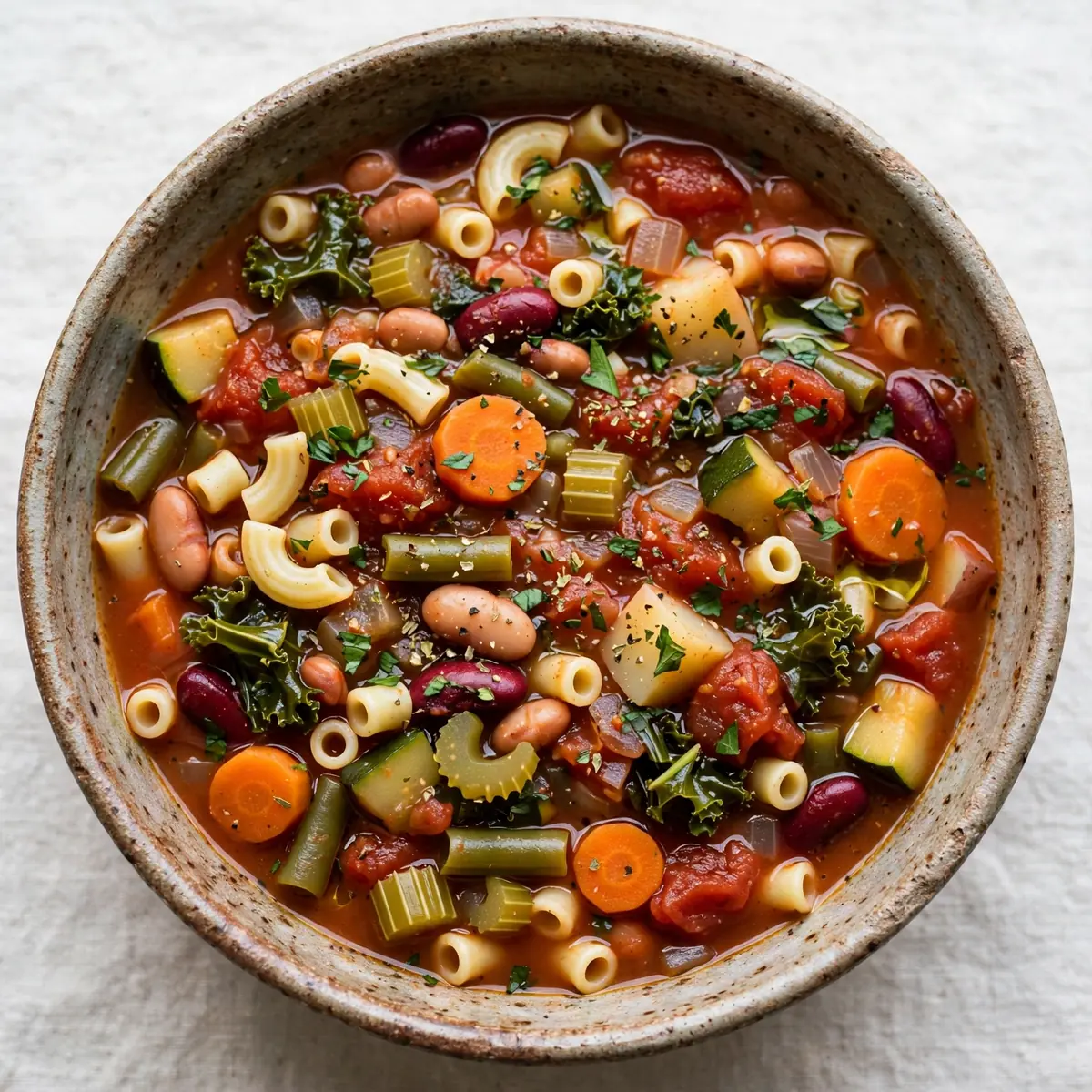
Ingredients
Method
- Soften the aromatics. Heat the olive oil in a frying pan over medium heat and cook the onion, carrot and celery for 5 minutes. You want the onion turning translucent and glossy, with a faint sweetness rising from the pan. This extra step is worth it — raw onions dropped straight into a slow cooker stay sharp and slightly harsh.
- Wake up the garlic and tomato purée. Stir in the garlic and tomato purée and cook for 60 seconds. The purée will darken from bright red to a deeper brick colour and smell rich rather than raw. Scrape everything into the slow cooker insert.
- Build the base. Add the courgette, red pepper, chopped tomatoes, cannellini beans, stock, oregano, basil and bay leaf. Stir once so the vegetables sit in an even layer, then season lightly with salt and pepper. The liquid should sit just above the vegetables — add a splash more stock if it looks tight.
- Cook low and slow. Cover and cook on high for 4 hours or on low for 7 hours. At the end, the carrots should yield instantly to a knife and the kitchen will smell of tomatoes and herbs. Resist lifting the lid during cooking; every peek adds roughly 20 minutes to the timing.
- Add the pasta and green beans. Turn the setting to high, stir in the pasta and green beans, and cook for 20-25 minutes with the lid on. The pasta should be tender with the faintest resistance at the centre, and the green beans should be bright rather than olive-dull.
- Check the seasoning. Fish out the bay leaf, then taste. Slow-cooked soups often need more salt than expected because the vegetables absorb it. Adjust, add a grind of pepper, and let the soup sit for 5 minutes to settle.
- Serve. Ladle into warm bowls and scatter with chopped parsley and a grating of cheese. The steam should carry oregano and tomato up to meet you before the first spoonful.
Notes
Soften the onion, carrot, and celery in a pan before adding to the slow cooker for a sweeter, more rounded flavor. Avoid lifting the lid during cooking. Add pasta and green beans only at the end so they don't overcook. Slow-cooked soups often need extra salt; taste and adjust before serving.