Perfect Plum Cake Recipe
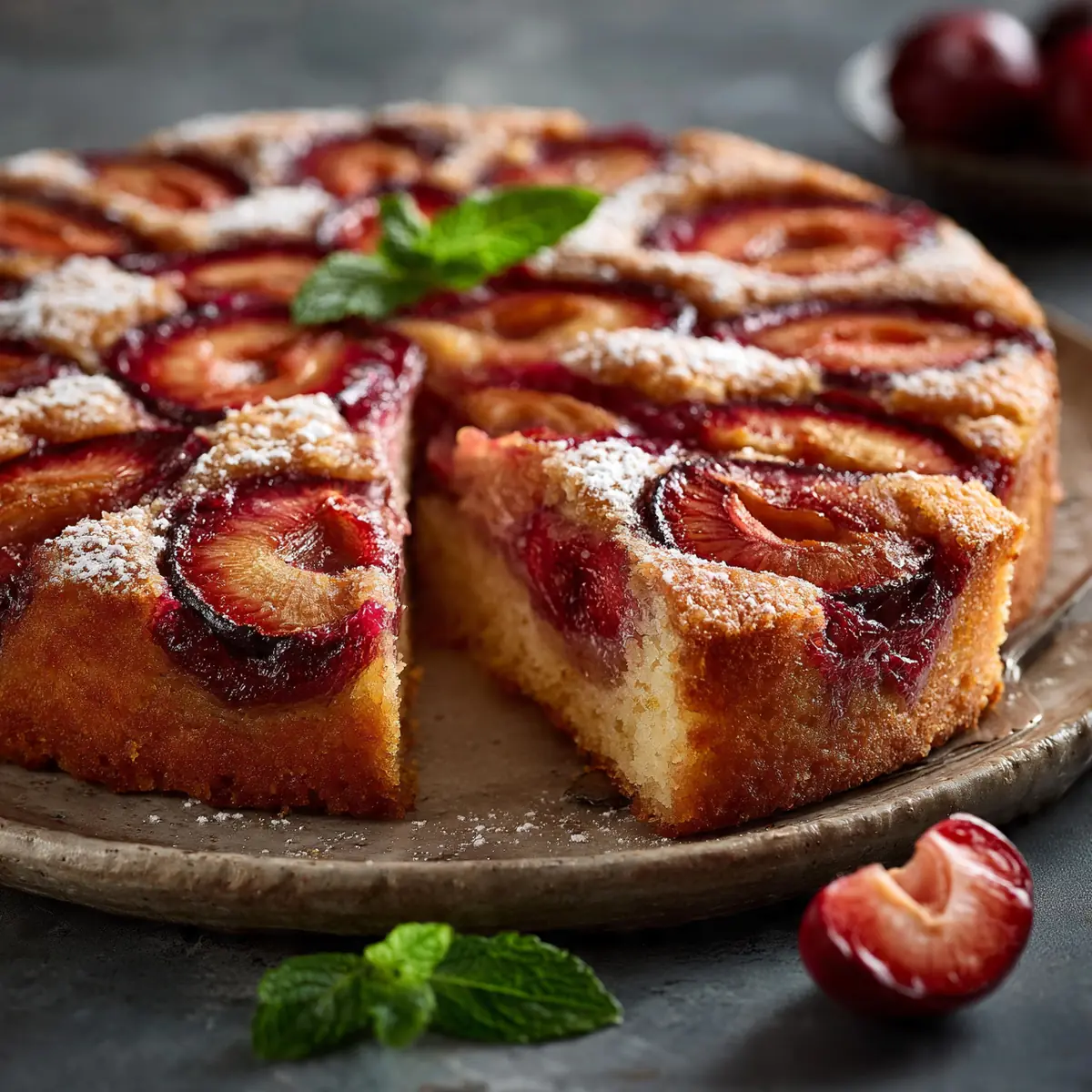
The first time I served this plum cake, I watched my guests’ eyes widen as I set the plate down. The glossy purple fruit, the delicate crumb, the faint whisper of warm spice rising from the slice — they didn’t just compliment it; they fell silent, then asked for the recipe before they’d finished their first bite. That’s the moment I knew this wasn’t just another bake; it was a showstopper. This Perfect Plum Cake Recipe is my go-to when I want to impress without a full day of labour, and I’m about to show you exactly how to plate it like a professional.
Recipe Overview
- Prep Time: 20 minutes
- Cook Time: 45 minutes
- Total Time: 1 hour 5 minutes (plus 15 minutes cooling)
- Servings: 8 generous slices
- Difficulty: Moderate — straightforward, but attention to detail matters
Why You’ll Love This Perfect Plum Cake Recipe
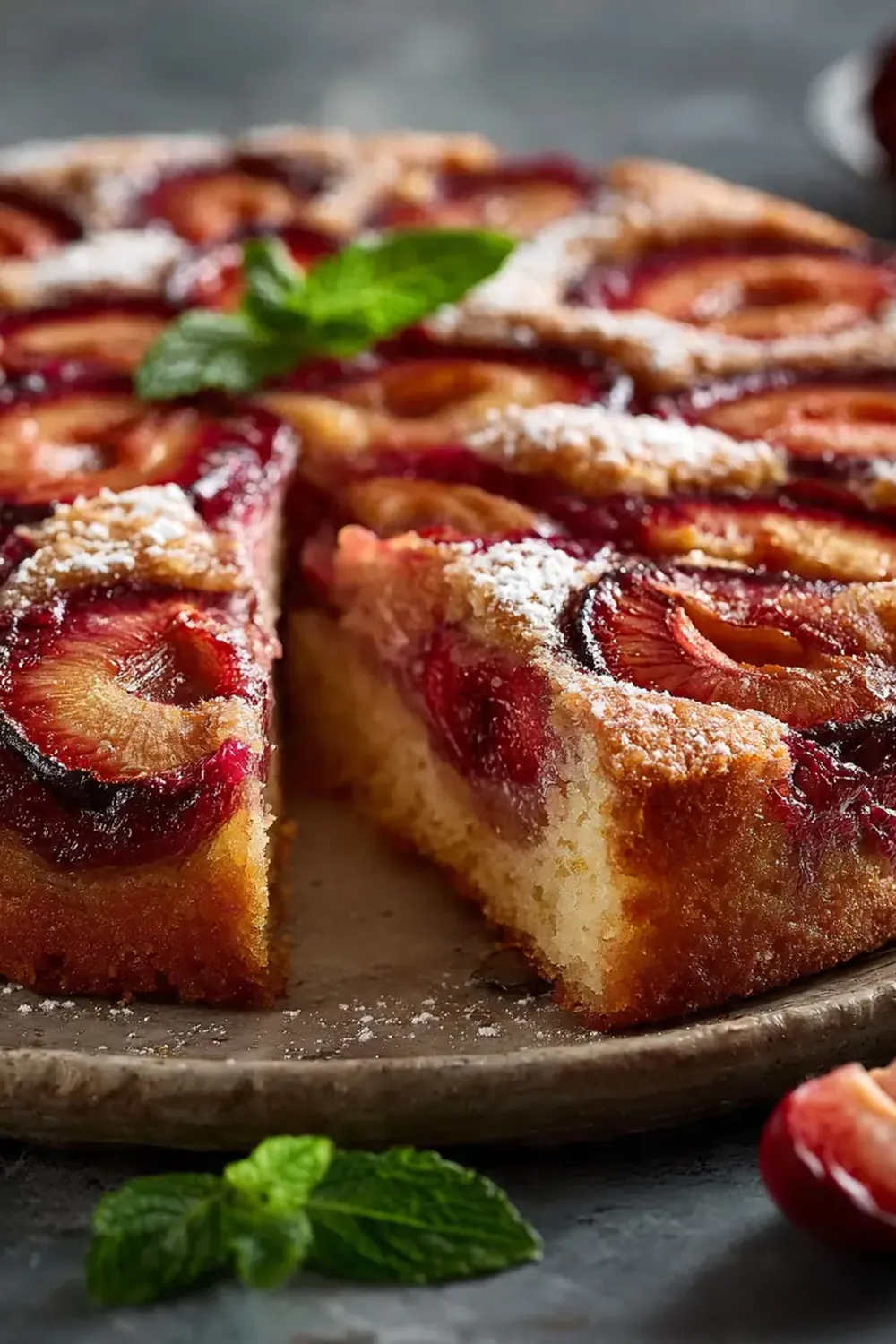
- Restaurant-quality presentation at home: The arrangement of plum halves on top creates a natural, elegant pattern that needs no extra decoration. It’s the kind of bake that looks like it came from a patisserie window.
- Deep, complex flavour from simple ingredients: Ripe plums caramelise as they bake, releasing their juices into the tender crumb. The result is a cake that tastes far more sophisticated than the sum of its parts.
- A foolproof method for even novice bakers: The recipe uses a creaming method that builds structure, but I’ve included sensory cues at every stage so you know exactly what to look for — no guesswork involved.
- Adaptable to any stone fruit season: While plums are the star here, you can swap in nectarines, apricots, or even sliced peaches when they’re at their peak. The method remains the same.
- Stays moist for days: Because of the fruit’s natural moisture and the careful balance of butter and eggs, this cake keeps beautifully for three to four days. If it lasts that long in your house.
Ingredients You’ll Need
- 6–8 ripe but firm plums (about 500g), halved and stoned
- 200g unsalted butter, softened to room temperature
- 200g caster sugar
- 3 large eggs, at room temperature
- 1 teaspoon vanilla extract
- 250g plain flour
- 1½ teaspoons baking powder
- ½ teaspoon bicarbonate of soda
- ¼ teaspoon fine sea salt
- 120ml full-fat plain yoghurt (or soured cream)
- 2 tablespoons demerara sugar, for sprinkling
- A squeeze of lemon juice (about 1 tablespoon)
- Icing sugar, for dusting (optional, for serving)
Tip: Your butter and eggs must be at room temperature. Cold ingredients will cause the batter to curdle, resulting in a dense, heavy cake. Set them out on the counter at least an hour before you start baking.
How to Make Perfect Plum Cake Recipe
- Preheat and prepare your tin. Set your oven to 180°C (fan-assisted). Grease a 23cm springform cake tin with a little butter, then line the base with a circle of baking parchment. The sides don’t need lining — the springform will release the cake cleanly, and the exposed edges will develop a lovely golden crust.
- Cream the butter and sugar. Place the softened butter and caster sugar in a large mixing bowl. Beat with an electric mixer on medium speed for 3–4 minutes, until the mixture turns pale, fluffy, and almost doubled in volume. It should look like soft, airy clouds — if it still feels gritty, keep beating. The sugar needs to dissolve into the butter for a tender crumb.
- Add the eggs and vanilla. Crack the eggs into a small jug and add the vanilla extract. With the mixer running on low, add the eggs one at a time, waiting until each is fully incorporated before adding the next. The batter will look smooth and glossy, and it should smell sweetly of butter and vanilla. If it looks like it’s separating, add a tablespoon of the flour from the measured amount — this will bring it back together.
- Combine the dry ingredients. In a separate bowl, whisk together the plain flour, baking powder, bicarbonate of soda, and salt. This ensures the raising agents are evenly distributed, so your cake rises uniformly without any bitter pockets.
- Fold the flour and yoghurt into the batter. Add half the flour mixture to the butter mixture and fold gently with a spatula until just combined. Add the yoghurt and the squeeze of lemon juice, fold again, then add the remaining flour. Fold only until you can’t see any streaks of white — overmixing will develop the gluten and make the cake tough. The final batter should be thick, smooth, and drop easily from a spoon.
- Prepare the plums. While the batter rests for a minute, halve your plums and remove the stones. If your plums are very large, cut each half into two wedges. Toss them gently in a bowl with the lemon juice to prevent browning — this also brightens their flavour.
- Assemble the cake. Spoon the batter into the prepared tin and spread it evenly with the back of a spoon. Arrange the plum halves on top, cut-side up, in concentric circles starting from the outside edge. Press them gently into the batter — they’ll sink slightly as the cake bakes, creating that beautiful, sunken look. Sprinkle the demerara sugar evenly over the top. This will caramelise into a crisp, golden crust.
- Bake and observe. Place the tin in the centre of the oven and bake for 40–45 minutes. At the 30-minute mark, the kitchen will fill with the warm, fruity scent of caramelising plums and butter. The cake is done when a skewer inserted into the centre (avoiding a plum) comes out clean or with a few moist crumbs. The top should be deep golden brown, and the edges will have pulled slightly away from the tin.
- Cool and serve with flair. Let the cake cool in the tin for 15 minutes. The plums will have released their juices, creating a gorgeous, glossy surface. Run a knife around the edge, release the springform, and transfer to a wire rack. For a restaurant-style finish, dust lightly with icing sugar just before serving. The contrast of white snow against the dark purple plums is stunning.
Tips From My Kitchen
- Choose the right plums: You want plums that are ripe enough to be sweet but firm enough to hold their shape during baking. If they’re too soft, they’ll dissolve into mush; too hard, and they’ll remain sour. A gentle squeeze should give slightly, like a ripe avocado. I make this at least once a week during plum season — it’s become a family favourite, and the right fruit makes all the difference.
- Don’t skip the demerara sugar topping: That coarse sugar isn’t just for sweetness — it creates a crackly, caramelised crust that contrasts beautifully with the soft fruit and tender crumb. It also gives the cake a professional, bakery-style appearance. If you don’t have demerara, turbinado or even a light sprinkle of granulated sugar will work.
- Use a springform tin for effortless removal: A standard cake tin will make it nearly impossible to get this cake out in one piece, and you’ll lose the beautiful plum presentation. The springform lets you release the sides cleanly, leaving the fruit intact. If you don’t have one, line a deep round tin with a parchment sling that hangs over the edges.
- Let the cake cool completely before slicing: I know the temptation is strong, but cutting into a warm cake will cause the crumb to tear and the plums to slide. Wait at least 45 minutes after removing from the tin. For the cleanest slices, use a serrated knife and a gentle sawing motion.
- Adjust baking time based on your oven: Every oven runs differently. If you notice the top browning too quickly after 25 minutes, tent the cake loosely with foil. If the cake isn’t done at 45 minutes, give it 5 more minutes and check again. The skewer test is your most reliable friend here.
Delicious Variations to Try
- Spiced Plum Cake: Add 1 teaspoon of ground cinnamon and ½ teaspoon of ground cardamom to the flour mixture. The warm spices complement the plums’ natural sweetness and add a layer of complexity that feels very grown-up.
- Vegan Plum Cake: Substitute the butter with 200g of vegan block butter (not spread), the eggs with 3 tablespoons of aquafaba (chickpea brine) beaten until frothy, and the yoghurt with 120ml of unsweetened plant-based yoghurt. The texture will be slightly denser but still delicious.
- Almond Plum Cake: Replace 50g of the plain flour with 50g of ground almonds. Add ½ teaspoon of almond extract along with the vanilla. Scatter flaked almonds over the top before baking for a lovely crunch and a nutty aroma.
What to Serve With Perfect Plum Cake Recipe
- A dollop of crème fraîche or clotted cream — the tanginess cuts through the sweetness beautifully.
- A scoop of good-quality vanilla ice cream, which melts into the warm cake and creates a sauce from the plum juices.
- A cup of strong black tea or a delicate jasmine green tea. The floral notes in the tea echo the plums’ natural perfume.
- For a savoury contrast, serve alongside a platter of aged cheddar or manchego cheese. Fruit and cheese is a classic pairing for good reason.
Frequently Asked Questions
Perfect Plum Cake Recipe
Ingredients
Method
- Preheat and prepare your tin. Set your oven to 180°C (fan-assisted). Grease a 23cm springform cake tin with a little butter, then line the base with a circle of baking parchment. The sides don't need lining — the springform will release the cake cleanly, and the exposed edges will develop a lovely golden crust.
- Cream the butter and sugar. Place the softened butter and caster sugar in a large mixing bowl. Beat with an electric mixer on medium speed for 3–4 minutes, until the mixture turns pale, fluffy, and almost doubled in volume. It should look like soft, airy clouds — if it still feels gritty, keep beating. The sugar needs to dissolve into the butter for a tender crumb.
- Add the eggs and vanilla. Crack the eggs into a small jug and add the vanilla extract. With the mixer running on low, add the eggs one at a time, waiting until each is fully incorporated before adding the next. The batter will look smooth and glossy, and it should smell sweetly of butter and vanilla. If it looks like it's separating, add a tablespoon of the flour from the measured amount — this will bring it back together.
- Combine the dry ingredients. In a separate bowl, whisk together the plain flour, baking powder, bicarbonate of soda, and salt. This ensures the raising agents are evenly distributed, so your cake rises uniformly without any bitter pockets.
- Fold the flour and yoghurt into the batter. Add half the flour mixture to the butter mixture and fold gently with a spatula until just combined. Add the yoghurt and the squeeze of lemon juice, fold again, then add the remaining flour. Fold only until you can't see any streaks of white — overmixing will develop the gluten and make the cake tough. The final batter should be thick, smooth, and drop easily from a spoon.
- Prepare the plums. While the batter rests for a minute, halve your plums and remove the stones. If your plums are very large, cut each half into two wedges. Toss them gently in a bowl with the lemon juice to prevent browning — this also brightens their flavour.
- Assemble the cake. Spoon the batter into the prepared tin and spread it evenly with the back of a spoon. Arrange the plum halves on top, cut-side up, in concentric circles starting from the outside edge. Press them gently into the batter — they'll sink slightly as the cake bakes, creating that beautiful, sunken look. Sprinkle the demerara sugar evenly over the top. This will caramelise into a crisp, golden crust.
- Bake and observe. Place the tin in the centre of the oven and bake for 40–45 minutes. At the 30-minute mark, the kitchen will fill with the warm, fruity scent of caramelising plums and butter. The cake is done when a skewer inserted into the centre (avoiding a plum) comes out clean or with a few moist crumbs. The top should be deep golden brown, and the edges will have pulled slightly away from the tin.
- Cool and serve with flair. Let the cake cool in the tin for 15 minutes. The plums will have released their juices, creating a gorgeous, glossy surface. Run a knife around the edge, release the springform, and transfer to a wire rack. For a restaurant-style finish, dust lightly with icing sugar just before serving. The contrast of white snow against the dark purple plums is stunning.
Notes
I’d love to hear how your Perfect Plum Cake Recipe turns out — drop a comment below and let me know what plums you used, how you plated it, and whether your guests asked for seconds. My husband, who’s usually picky, asked for thirds the first time I made this, and I’ve been chasing that same reaction ever since. Happy baking, and remember: the best presentation starts with confidence, not perfection.