Ingredients
Method
- Prepare the salmon: Pat the fillet dry with kitchen paper. Season generously with salt and pepper on both sides. Let it rest at room temperature for 10 minutes — this helps the seasoning penetrate and ensures even cooking.
- Start the pasta water: Bring a large pot of salted water to a rolling boil. The water should taste like the sea — this is the only chance to season the pasta itself. Drop the tagliatelle and cook until al dente, about 8 minutes, or according to package instructions.
- Sear the salmon: Heat a large non-stick frying pan over medium-high heat. Add the olive oil and swirl to coat. Place the salmon skin-side down — you should hear a satisfying sizzle. Cook for 4 minutes without moving it; the skin will turn deep golden and crispy. Flip gently and cook for a further 3 minutes for medium, or until the flesh flakes easily with a fork. The centre should be opaque but still moist. Transfer to a plate and cover loosely with foil.
- Build the sauce: In the same pan, reduce the heat to medium. Add the shallots and cook for 2 minutes until softened and translucent, scraping up any browned bits from the bottom — that's where the flavour lives. Add the garlic and stir for 30 seconds until fragrant.
- Create the cream base: Pour in the double cream and chicken stock, stirring constantly. Bring to a gentle simmer — you'll see small bubbles around the edges. Add the lemon zest and capers. Let it cook for 2 minutes until slightly thickened; the sauce should coat the back of a spoon.
- Combine pasta and sauce: Drain the pasta, reserving a cup of the starchy water. Add the pasta directly to the sauce, along with half the Parmesan and half the dill. Toss vigorously with tongs for 1 minute — the sauce will cling to each strand. If it seems too thick, add a splash of reserved pasta water to loosen it.
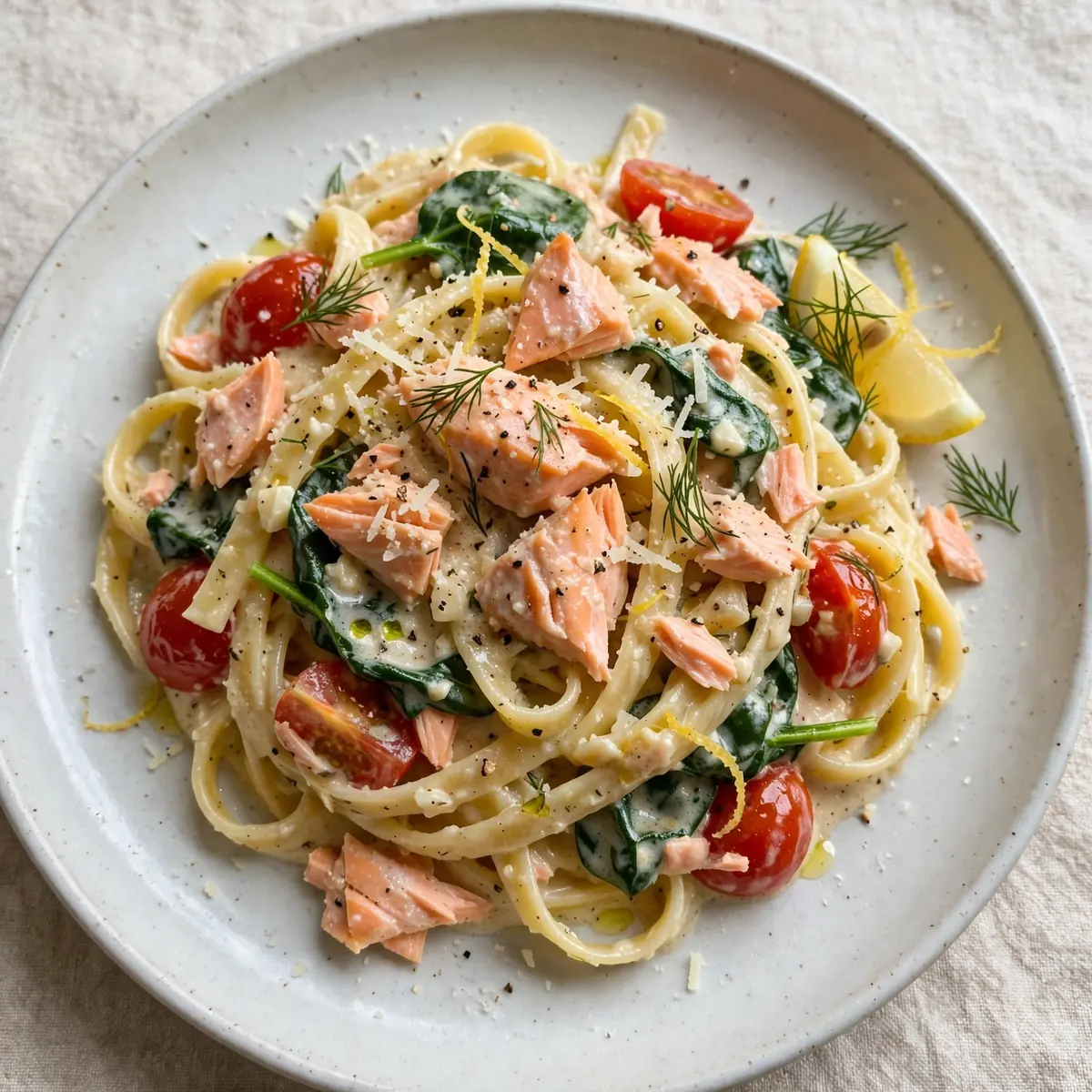
- Plate with precision: Using tongs, twirl a portion of pasta into a neat nest in the centre of each warmed plate. Flake the salmon into large chunks and arrange on top of the pasta, skin-side up for that dramatic crunch. Sprinkle the remaining Parmesan and dill over the top. Finish with a squeeze of lemon juice, a crack of black pepper, and a drizzle of extra virgin olive oil.
- Serve immediately: Place a lemon wedge on the side of each plate. This dish waits for no one — the pasta will continue to absorb the sauce, so serve as soon as it's plated.
Notes
Reserve pasta water to adjust sauce consistency. Serve immediately for best texture.