Ingredients
Method
- Prepare the salmon. Pat the fillets dry with kitchen paper — this is crucial for achieving that coveted crispy skin. Season the flesh side generously with salt and a few cracks of black pepper. Let them sit at room temperature for 10 minutes; you'll notice the salt drawing out a little moisture, which you can blot away. The skin should feel dry and slightly tacky to the touch before it hits the pan.
- Heat the pan until it's properly hot. Place a large frying pan over medium-high heat and add 2 tablespoons of olive oil. Swirl the oil until it shimmers and moves like water in the pan — this takes about 90 seconds. You should see faint wisps of smoke beginning to rise. Drop a tiny piece of salmon skin into the oil; if it sizzles vigorously on contact, the pan is ready.
- Sear the salmon skin-side down. Lay the fillets into the pan away from you to avoid splattering hot oil. Press gently on each fillet with a spatula for 5 seconds to ensure full contact with the pan. Listen for a steady, lively sizzle — if it dulls, the heat is too low. Cook for 4-5 minutes without moving the fillets. The skin will turn a deep amber colour, and you'll see the flesh begin to turn opaque from the bottom upward, about a third of the way through the fillet.
- Flip and finish cooking. Carefully flip each fillet using a fish slice. The skin should be crisp and golden, releasing easily from the pan. Cook for a further 2-3 minutes on the flesh side. The salmon should feel firm yet springy when pressed gently in the centre — this indicates medium doneness. If you prefer it more well done, give it another minute. Transfer the fillets to a warm plate, skin-side up, and tent loosely with foil. You'll hear a faint crackle as the skin stays crisp.
- Sweat the aromatics. Reduce the heat to medium-low. Add the butter and the remaining tablespoon of olive oil to the same pan. Once the butter has melted and begins to foam, add the shallot and sliced garlic. Stir constantly for 1-2 minutes until the shallot turns translucent and the garlic releases its fragrance — you'll smell a sweet, nutty aroma rather than anything sharp or burnt. Scrape up any browned bits from the bottom of the pan as you stir; those little specks are packed with flavour.
- Wilt the spinach in batches. Add half the spinach to the pan, along with a generous pinch of salt. Toss it gently with tongs — you'll see it begin to collapse almost immediately, turning a vivid, glossy green. The volume will reduce dramatically within 30 seconds. Add the remaining spinach and repeat. You should hear a gentle hissing sound as the moisture releases from the leaves. Once all the spinach is wilted, you'll have a compact, dark green mound that smells intensely earthy and fresh.
- Finish the spinach with cream and lemon. Pour in the double cream and stir to combine. Let it simmer gently for 2 minutes until the cream thickens slightly and coats the spinach leaves — the mixture should look silky and cohesive, not watery. Squeeze in the lemon juice and stir through. Taste and adjust seasoning with salt, pepper, and a pinch of red pepper flakes if you'd like a gentle warmth. The sauce should be rich, tangy, and just a little indulgent.
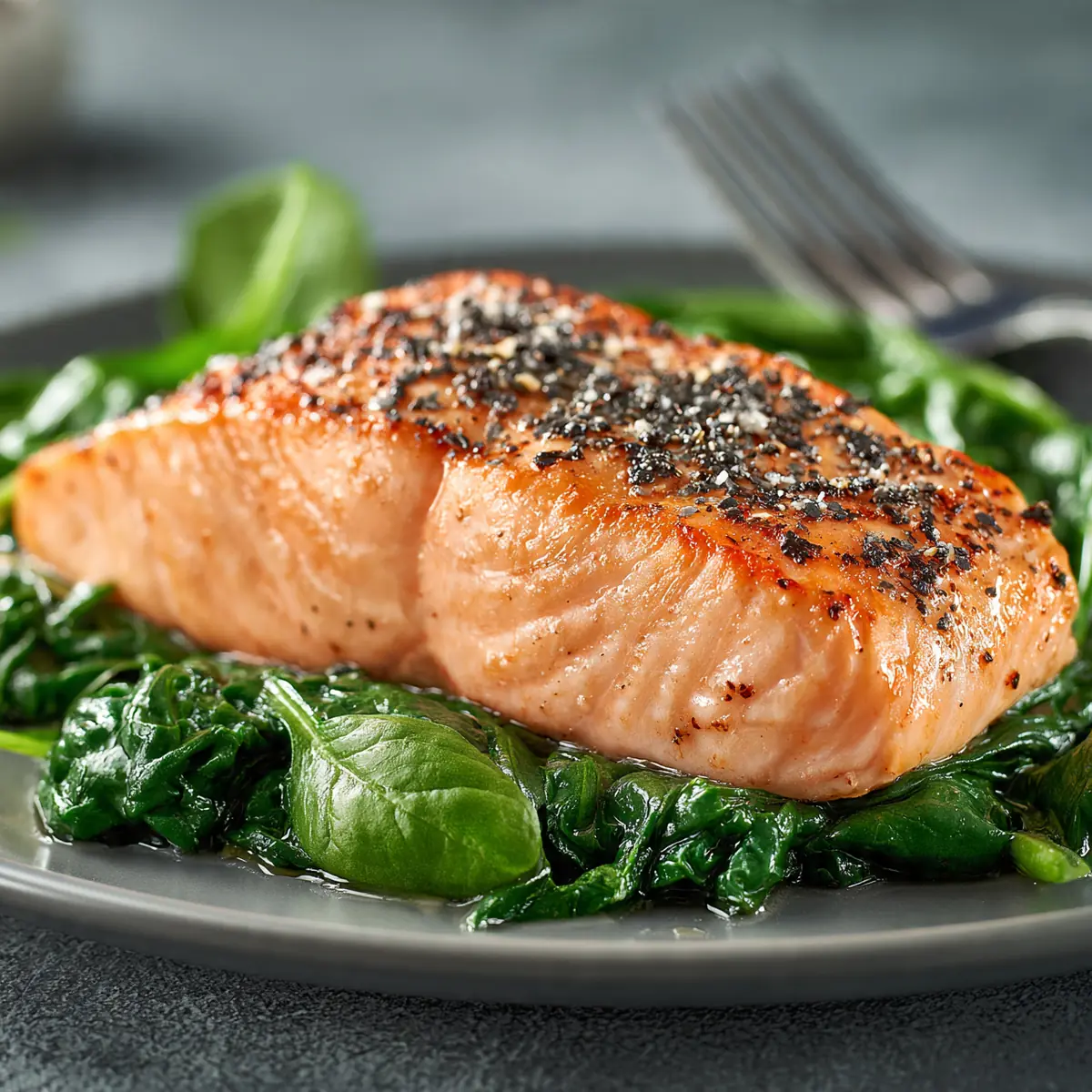
- Plate with intention. Spoon a generous bed of creamed spinach onto each warmed plate, creating a slight well in the centre. Place a salmon fillet on top, skin-side up, so the crisp skin remains untouched by the sauce. Sprinkle a few flakes of sea salt over the salmon and add a final twist of black pepper. For an extra touch, garnish with a thin lemon slice or a small handful of micro herbs — the visual contrast will make your guests think you've been cooking all day.
Notes
For best results, let salmon rest at room temperature for 10 minutes after seasoning. The skin must be dry and slightly tacky before searing. Red pepper flakes are optional but add a nice warmth. Tent cooked salmon loosely with foil to keep warm while making the spinach.