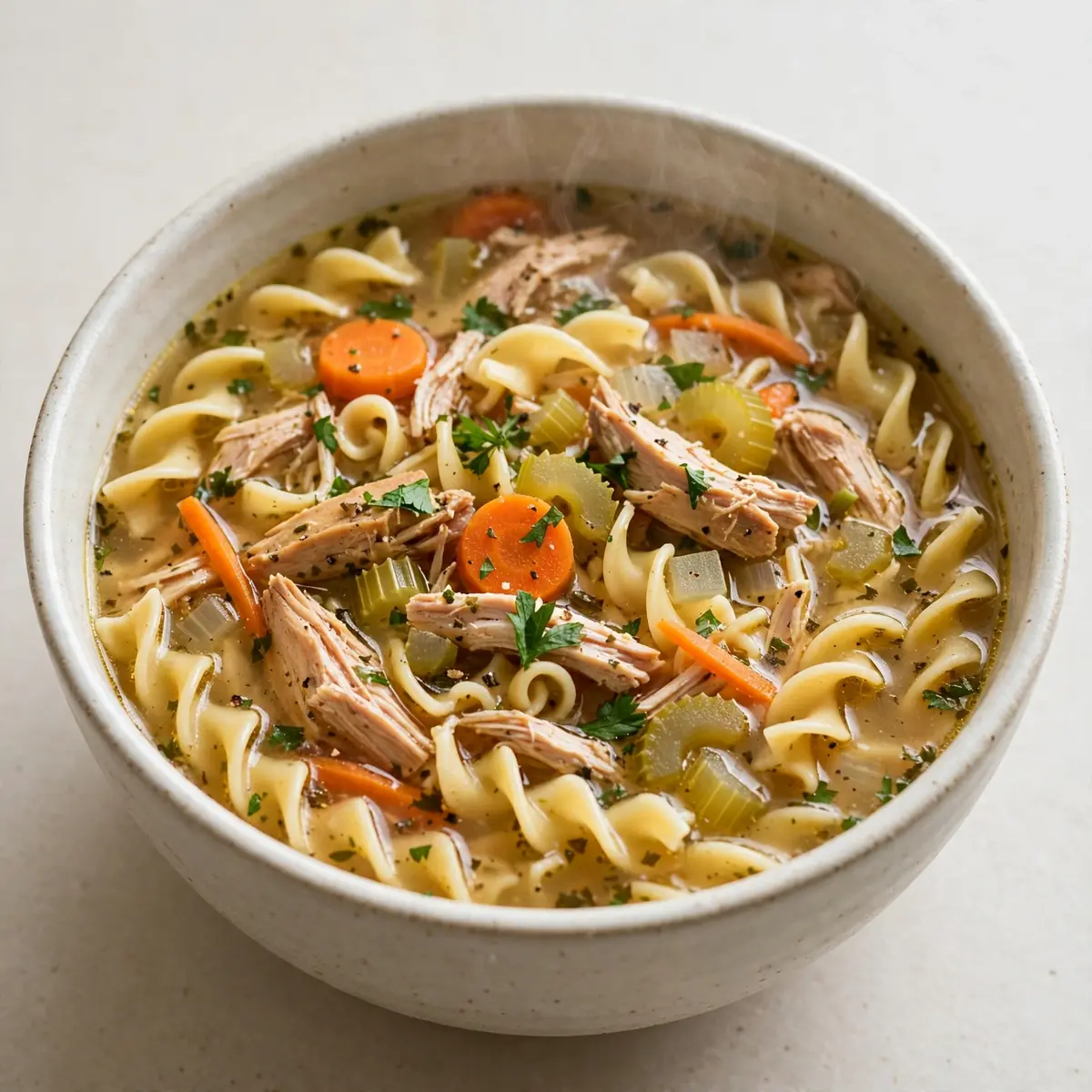
Ingredients
Method
- Sauté the aromatics. Set the Instant Pot to Sauté on the medium setting and add the olive oil. Once it shimmers, tip in the onion, carrots, and celery. Cook for 5 to 6 minutes, stirring occasionally, until the onion turns translucent and the celery smells sweet rather than raw. You want soft, glossy vegetables — not browned ones.
- Bloom the garlic and herbs. Add the minced garlic, thyme, and oregano and stir for 30 seconds. The kitchen should fill with a warm, savoury aroma almost immediately. Do not walk away here; garlic turns bitter in seconds if it catches.
- Add the chicken and stock. Nestle the chicken thighs into the pot, then pour in the stock. Add the bay leaves, salt, and pepper. The liquid should just cover the chicken — if it does not, top up with a splash more stock or water.
- Pressure cook. Secure the lid, set the valve to Sealing, and cook on High Pressure for 12 minutes. The pot will take roughly 10 minutes to come up to pressure, and you will hear a gentle hiss once it seals.
- Let it release naturally. When the timer beeps, switch the pot off and leave it alone for 10 minutes. This natural release keeps the chicken tender and stops the broth from sputtering out of the valve. After 10 minutes, turn the valve to Venting to release any remaining pressure.
- Shred the chicken. Lift the thighs out onto a board. They should be pale, opaque, and fall apart at the touch of a fork. Discard the bay leaves, then shred the meat and return it to the pot.
- Cook the noodles. Switch back to Sauté and bring the broth to a lively simmer. Add the noodles and cook for 5 to 6 minutes, until they are just tender with a slight bite at the centre. Stir once or twice so they do not clump.
- Finish and taste. Stir in the frozen peas and cook for 1 minute more — they will turn bright green and plump. Kill the heat, then add the parsley and lemon juice. Taste and adjust the salt; the amount you need depends entirely on how salty your stock was.
Notes
For best results, use good-quality chicken stock and adjust salt to taste. If you prefer a thicker soup, you can mash some of the vegetables or add a cornstarch slurry.