Ingredients
Method
- Prepare the Chicken: Place a chicken breast between two sheets of baking parchment or in a large plastic bag. Using a rolling pin or meat mallet, gently pound it to an even thickness of about 1.5cm (just over half an inch). This ensures it cooks quickly and evenly. Repeat with the remaining chicken breasts.
- Set Up Your Breading Station: You'll need three shallow dishes. In the first, mix the plain flour, salt, pepper, and garlic powder. In the second, lightly beat the two eggs. In the third, spread out the panko breadcrumbs.
- Coat the Chicken: Working with one chicken breast at a time, dredge it in the seasoned flour, shaking off any excess. Next, dip it into the beaten egg, making sure it's fully coated. Finally, press it firmly into the panko breadcrumbs, turning it over to coat both sides completely. I find that using one hand for the "wet" stage (egg) and the other for the "dry" stages (flour, panko) helps keep my fingers from becoming a sticky mess.
- Rest the Chicken: Place the breaded chicken cutlets on a wire rack or a plate. Let them rest for at least 10 minutes. This helps the coating to dry out slightly and adhere to the chicken, which is crucial for a non-soggy, super crispy result. While they rest, you can make the sauce.
- Make the Tonkatsu Sauce: In a small bowl, simply whisk together the ketchup, Worcestershire sauce, soy sauce, and mirin (or sugar) until smooth. Set aside.
- Heat the Oil: Pour enough vegetable oil into a large, heavy-bottomed frying pan or skillet to come about 1.5cm up the sides. Heat over a medium-high heat until it reaches about 170°C (340°F). If you don't have a thermometer, you can test it by dropping in a panko crumb – it should sizzle immediately and turn golden in about 30 seconds.
- Fry the Chicken: Carefully place two chicken cutlets into the hot oil, ensuring not to overcrowd the pan. Fry for 3-4 minutes per side, until the coating is a deep golden brown and the chicken is cooked through. The internal temperature should be 74°C (165°F).
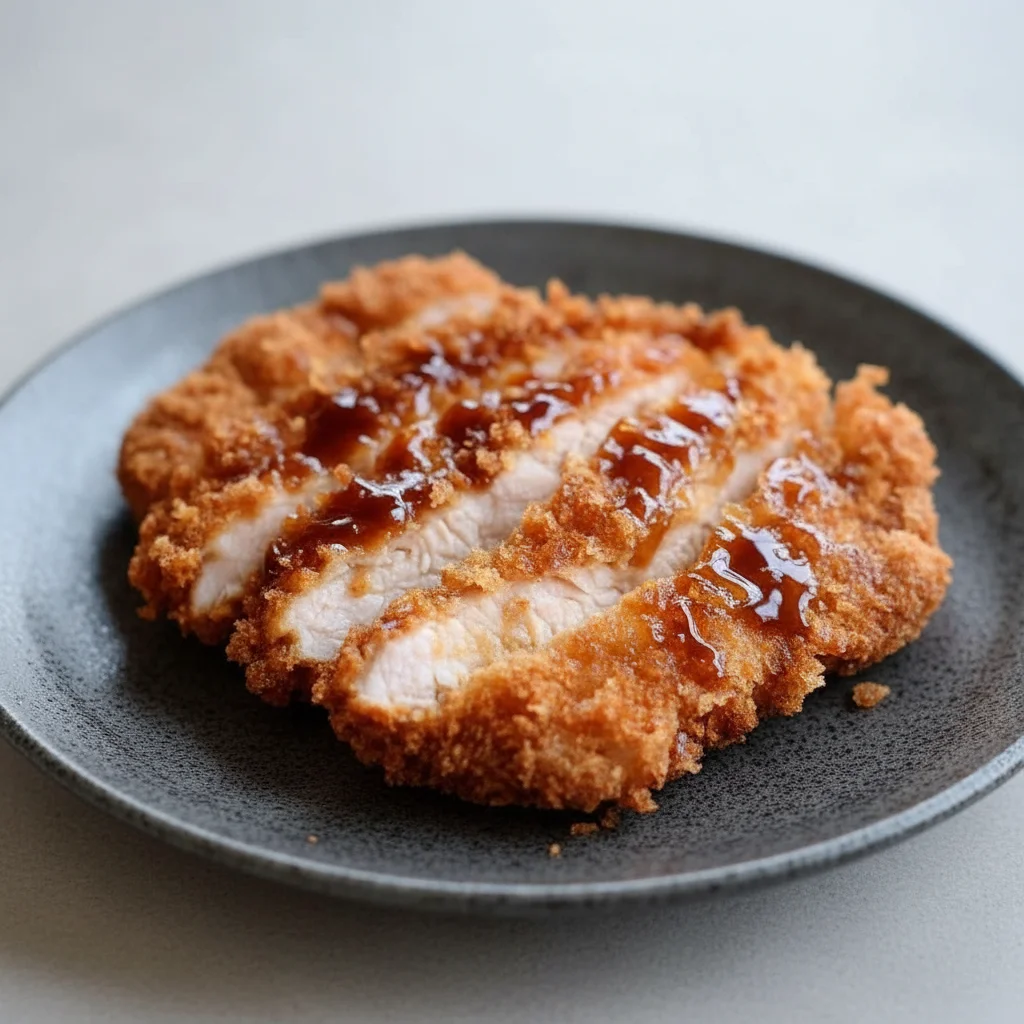
- Drain and Serve: Remove the cooked katsu from the pan and place it on a wire rack to drain any excess oil. This is much better than using kitchen paper, which can trap steam and make the underside soggy. Repeat with the remaining chicken. Let it rest for a minute before slicing into strips. Serve immediately with steamed rice, shredded cabbage, and a generous drizzle of the Tonkatsu sauce.
Notes
For maximum crispiness, drain the cooked chicken on a wire rack instead of paper towels. This prevents the bottom from getting soggy by allowing air to circulate.