Ingredients
Method
- Boil the pasta. Fill your large pot with water, add a generous handful of salt, and bring it to a rolling boil over high heat. Add the pasta and cook for one minute less than the package instructions suggest. You want it slightly underdone — it will finish cooking in the sauce. Before draining, scoop out and reserve about 200 ml of the starchy cooking water. This liquid is the secret to a silky sauce that clings to every piece of pasta.
- Crisp the sage. While the pasta cooks, place your large frying pan over medium heat and add the olive oil and butter. Once the butter has melted and is just starting to foam — you'll hear a gentle sizzle — add the sage leaves in a single layer. Fry them for about 60 seconds per side until they darken slightly and turn crisp at the edges. The kitchen will smell nutty and herbal. Lift them out with a slotted spoon and set aside on a plate lined with kitchen paper.
- Soften the onion. Add the diced onion to the same pan with the sage-infused oil. Cook over medium heat for 4–5 minutes, stirring occasionally, until the pieces turn translucent and glossy. Add the garlic and cook for another 30 seconds — just until it smells fragrant, not sharp. Burnt garlic will turn the whole sauce bitter, so keep an eye on it.
- Build the sauce. Stir in the pumpkin purée, nutmeg, salt, pepper, and chilli flakes if using. Cook for 2 minutes, stirring constantly, until the purée darkens slightly and smells sweet and earthy rather than raw. Pour in the stock and let it bubble gently for 2 minutes to reduce a little.
- Add the cream. Lower the heat and pour in the double cream. Stir until the sauce is uniform and pale orange, then let it warm through for 2–3 minutes. It should coat the back of a spoon without dripping straight off. Taste and adjust the seasoning now — the cheese will add saltiness later, so go easy.
- Combine pasta and sauce. Drain the pasta and tip it straight into the pan. Toss with tongs for a full minute, adding reserved pasta water a splash at a time until the sauce looks glossy and coats every piece. You'll see it transform from thick and clumpy to loose and velvety.
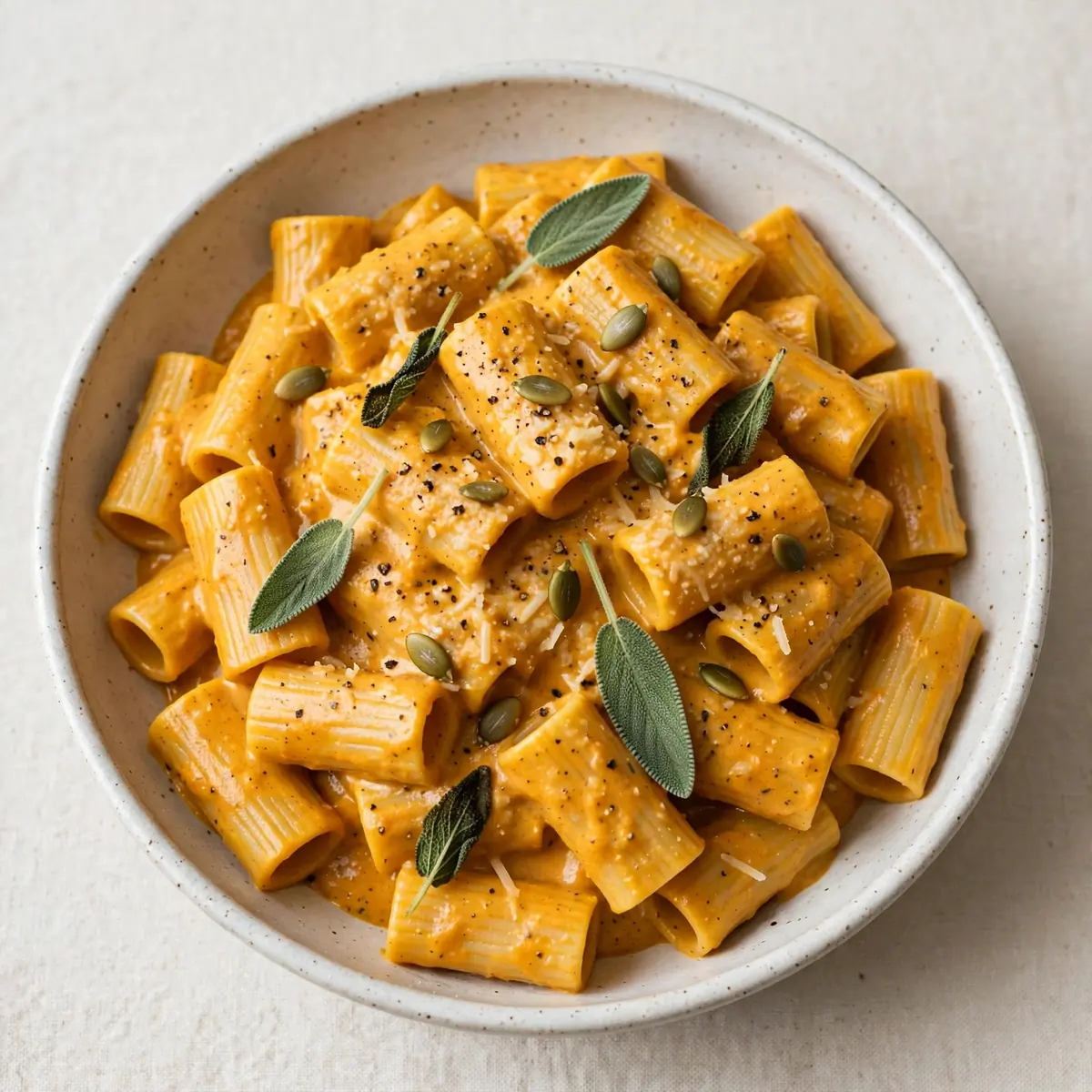
- Finish with cheese. Take the pan off the heat and stir in the grated Parmesan. The residual warmth will melt it into the sauce without risk of it splitting. Crumble most of the crispy sage over the top and give everything one last toss.
- Serve immediately. Divide between warm bowls, top with the remaining sage leaves and an extra grind of black pepper, and pass grated cheese at the table.
Notes
Use tinned pumpkin purée, not pumpkin pie filling, which contains added sugar and spices. Fry the sage carefully so it crisps without burning; burnt sage turns bitter. Reserve pasta water before draining to help emulsify the sauce. Add the Parmesan off the heat to prevent the sauce from splitting. For a vegetarian version, use vegetable stock and ensure the Parmesan is rennet-free. Leftovers can be stored in the refrigerator for up to 3 days; reheat gently with a splash of water or stock.