Ingredients
Method
- Prepare the chicken: Place each chicken breast between two sheets of cling film and gently pound to an even thickness of about 2cm. Season both sides generously with salt and pepper. In a shallow bowl, mix the flour, garlic powder, and smoked paprika. Dredge each breast in the seasoned flour, shaking off the excess. You should see a light, even dusting clinging to the surface.
- Sear to golden perfection: Heat the olive oil in a large frying pan over medium-high heat until it shimmers and a drop of water sizzles instantly. Add the chicken breasts, leaving space between each. Cook for 4–5 minutes without moving them — you'll hear a steady, gentle sizzle. Flip when the underside is a deep golden brown and releases easily from the pan. Cook the second side for another 4 minutes until similarly coloured. Transfer the chicken to a plate and cover loosely with foil. The kitchen should smell nutty and savoury.
- Build the flavour base: Reduce the heat to medium. Add the butter to the same pan. Once it melts and foams, add the shallot. Sauté for 2 minutes until it softens and becomes translucent, stirring occasionally. Add the minced garlic and cook for 30 seconds until fragrant but not browned — the aroma will be sweet and pungent.
- Deglaze and create the sauce: Pour in the chicken stock, scraping the bottom of the pan with a wooden spoon to lift all the browned bits (the fond). Let it bubble for 2–3 minutes, reducing slightly. The liquid should look glossy and smell deeply savoury. Stir in the Dijon mustard until fully incorporated.
- Add the cream and cheese: Lower the heat to a gentle simmer. Pour in the double cream and stir continuously for 1 minute until the sauce thickens enough to coat the back of a spoon. The colour will shift to a warm ivory. Sprinkle in the Parmesan cheese and whisk until melted and smooth. The sauce will smell rich and slightly nutty.
- Finish the chicken in the sauce: Stir in the fresh thyme leaves and lemon juice. Return the chicken breasts to the pan, nestling them into the sauce. Spoon some sauce over the tops. Cover and simmer on low heat for 5–7 minutes, until the chicken is cooked through and the sauce has thickened further. The internal temperature should reach 74°C. The sauce should be creamy and clinging, not watery.
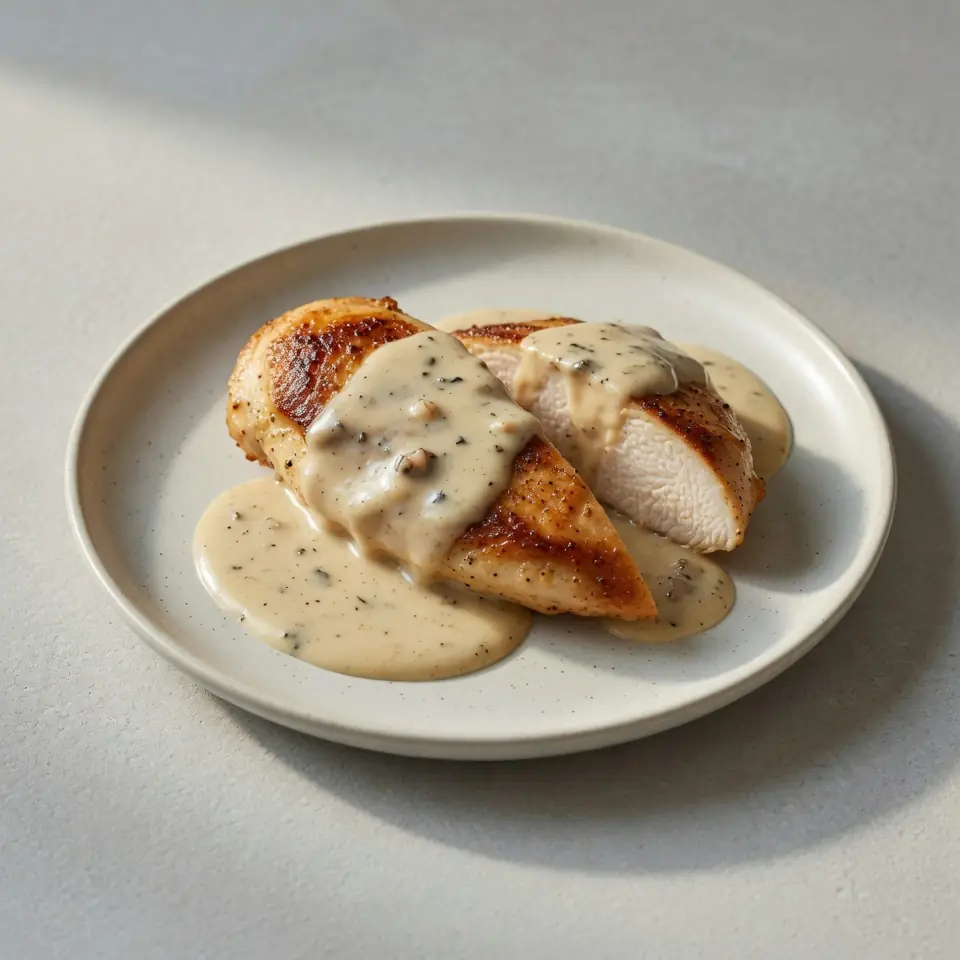
- Rest and serve: Remove the pan from the heat. Let the chicken rest in the sauce for 5 minutes — this allows the juices to redistribute. Transfer each breast to a warmed plate, spoon a generous amount of sauce over the top, and garnish with fresh thyme leaves and a twist of black pepper.
Notes
Pound chicken breasts to an even 2cm thickness for uniform cooking. Ensure the pan is hot enough to create a deep golden crust when searing. Scrape the 'fond' (browned bits) from the bottom of the pan when deglazing with chicken stock to build a rich flavor base for the sauce. Cook chicken until an internal temperature of 74°C (165°F) is reached. Allowing the chicken to rest in the sauce for 5 minutes after cooking helps redistribute juices for a more tender result.