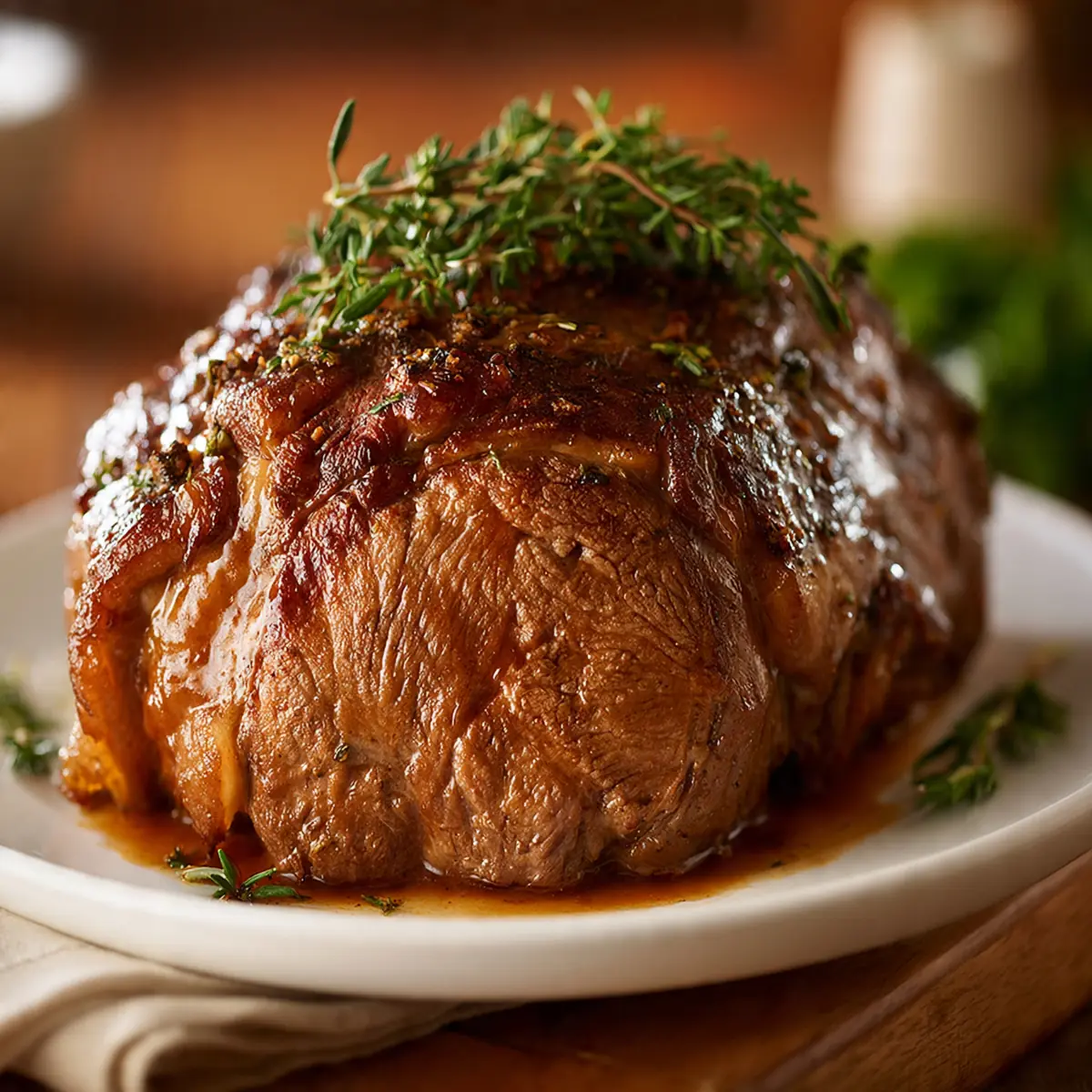
Ingredients
Method
- Preheat and Prepare: Set your oven to 220°C (200°C fan). While it heats, pat the beef dry with kitchen paper — moisture is the enemy of a good sear. You want the surface to feel tacky, not wet.
- Season the Joint: Rub the olive oil all over the beef, then massaging in the salt and pepper. Using a small, sharp knife, make shallow incisions across the top and stud each slit with a slice of garlic. Press the rosemary and thyme leaves onto the fat cap so they stick. The smell of the herbs hitting the hot pan later is simply wonderful.
- Create the Vegetable Bed: Scatter the quartered onions, chopped carrots, celery, and bay leaves into a deep roasting tin. This aromatic base not only flavours the meat as it roasts but also forms the foundation of your gravy. The vegetables should sizzle slightly when they hit the hot tin.
- Sear the Beef: Heat a large frying pan over high heat until it's smoking — you should see a faint wisp of smoke rising. Carefully lower the beef into the pan and leave it untouched for 3 minutes. You'll hear a fierce sizzle, which is the sound of a good crust forming. Turn the joint with tongs and repeat on all sides until the entire surface is a deep, dark brown — almost mahogany in colour.
- Roast to Perfection: Place the seared beef directly on top of the vegetable bed in the roasting tin. Pour the beef stock around the meat — not over it, or you'll wash away the crust. Roast for 20 minutes at 220°C, then reduce the temperature to 180°C (160°C fan). For medium-rare, cook for a further 15 minutes per 500g. Insert a meat thermometer into the thickest part: aim for 52°C for rare, 58°C for medium-rare, or 65°C for medium. The exterior will be crisp and dark, while the inside should feel springy when pressed gently.
- Rest the Joint: Transfer the beef to a warm platter or carving board, tent loosely with foil, and leave to rest for 20-25 minutes. This step is non-negotiable. As the meat rests, you'll see juices pooling on the board — these are the flavours you want to keep inside the beef. The temperature will also rise by about 3-4°C during resting, so remove it from the oven slightly earlier than your target.
- Make the Gravy: While the beef rests, place the roasting tin directly on the hob over medium heat. The vegetables should be soft and caramelised, with browned bits stuck to the bottom — that's pure flavour. Stir in the tomato purée and cook for 1 minute until it darkens. Sprinkle over the flour and whisk vigorously for 2 minutes until the mixture turns a light golden brown and smells nutty. Slowly pour in 300ml of water (or more stock if you have it), whisking constantly. Bring to a gentle simmer — you'll see the gravy thicken and become glossy. Strain through a sieve into a warmed jug, pressing on the vegetables to extract every drop of flavour. Season with salt and pepper to taste.
- Carve and Serve: Remove the foil from the rested beef. Using a long, sharp carving knife, slice the meat against the grain into even pieces, about 1cm thick. The slices should reveal a beautiful rosy pink centre with a dark, crisp edge. Arrange the slices neatly on a warmed platter, spoon a little gravy over the top, and serve the rest alongside.
Notes
Cooking time is approximate and depends on the size of the roast and desired doneness. Resting the beef is essential for juiciness. For best results, use a meat thermometer.