Delicious Cooking Asparagus Recipe
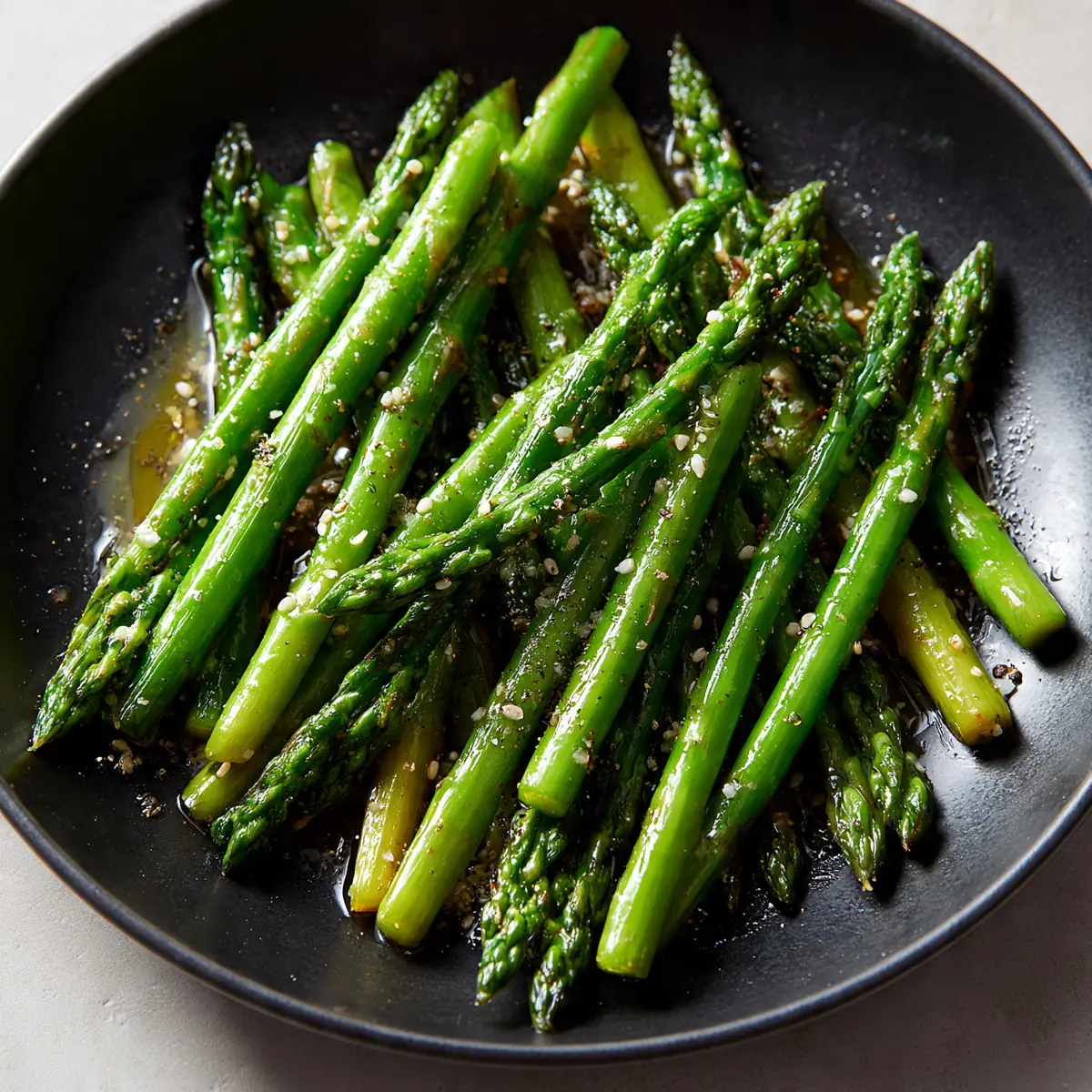
I still remember the first time I plated asparagus for guests and watched their forks pause mid-air, eyes fixed on the plate. That moment taught me something crucial: a simple vegetable, treated with respect, can steal the show far more dramatically than any complicated main course. This recipe is my answer to the perennial host’s dilemma — how to serve something that tastes as refined as it looks, without spending the entire party hidden away in the kitchen. Let’s get straight to it, because this is one of those rare dishes where technique matters more than ingredients, and I’m about to share every last detail.
Recipe Overview
- Prep Time: 10 minutes
- Cook Time: 15 minutes
- Total Time: 25 minutes
- Servings: 4 as a side dish
- Difficulty: Moderate (the technique is simple, but the precision elevates it)
Why You’ll Love This Delicious Cooking Asparagus Recipe
- Restaurant-quality results at home: This method gives you those beautifully charred, tender spears with a satisfying snap, exactly like the ones you’d be charged a premium for at a fine dining establishment.
- Designed for entertaining: The entire process is streamlined so you spend less time cooking and more time with your guests. The final plating takes thirty seconds but looks like you’ve been at it for hours.
- Builds confidence in the kitchen: Mastering this technique teaches you about heat control, timing, and finishing touches that will improve every other vegetable dish you make from now on.
- Adaptable to any occasion: Whether it’s a quiet weeknight dinner for two or a festive gathering, the recipe scales effortlessly and pairs beautifully with almost any protein or grain.
- Uses humble ingredients brilliantly: There is nothing exotic on this list. You likely already have most of these items in your pantry, which means you can decide to make this on a whim and still impress.
Ingredients You’ll Need
- 500g fresh asparagus spears (medium thickness, about the diameter of a pencil)
- 3 tablespoons extra virgin olive oil
- 2 cloves garlic, finely minced
- 1 tablespoon unsalted butter
- 1 teaspoon flaky sea salt (plus more for finishing)
- ½ teaspoon freshly cracked black pepper
- Zest of 1 lemon
- 1 tablespoon fresh lemon juice
- 30g finely grated Parmesan cheese (or vegetarian hard cheese)
- 1 tablespoon toasted pine nuts
- Fresh microgreens or edible flowers for garnish (optional, but transformative for presentation)
Tip: For the most impressive results, choose asparagus spears that are all roughly the same thickness. This ensures they cook evenly, so every spear on the plate has the same perfect texture. Thicker spears can work, but you’ll need to add an extra minute to the cooking time.
How to Make Delicious Cooking Asparagus Recipe
- Prepare the asparagus: Hold each spear at both ends and gently bend until it snaps — it will naturally break at the woody, fibrous point where the tender part begins. Discard the woody ends. Using a vegetable peeler, shave off the tough outer layer from the bottom third of each spear. You should hear a clean, crisp snap as you bend them, and the peeled section will reveal a pale green, moist interior.
- Parboil for vibrant colour: Bring a large pot of salted water to a rolling boil. Drop the asparagus in and cook for exactly 90 seconds. The spears will turn a brilliant, almost electric green, and you’ll notice they become slightly more pliable. Immediately transfer them to a bowl of ice water for two minutes to stop the cooking. Drain and pat them completely dry with a clean tea towel — this step is critical, as any moisture left on the surface will prevent proper browning later.
- Get the pan screaming hot: Place a large, heavy-bottomed frying pan (cast iron is ideal) over high heat for a full two minutes. Add the olive oil and swirl to coat the surface. The oil should shimmer and ripple immediately when it hits the pan, and you’ll see the faintest wisp of smoke rising. This intense heat is what creates that restaurant-style char.
- Sear the spears: Lay the asparagus in a single, uncrowded layer in the hot pan. You should hear an immediate, vigorous sizzle — if the sound is weak, the pan isn’t hot enough. Cook without moving them for 3 minutes. The bottoms will develop deep golden-brown marks, and the spears will release a nutty, toasty aroma. Use tongs to carefully turn each spear and cook for another 2 minutes on the second side. The texture should feel firm but with a slight give when gently squeezed.
- Add the garlic and butter: Reduce the heat to medium-low. Push the asparagus to one side of the pan and add the butter and minced garlic to the empty space. Let the butter melt and foam gently, about 30 seconds, until the garlic becomes fragrant and just starts to turn pale gold — you’ll smell a sweet, mellow garlic aroma rather than a sharp, burnt one. Toss the asparagus in the butter-garlic mixture until every spear is glistening.
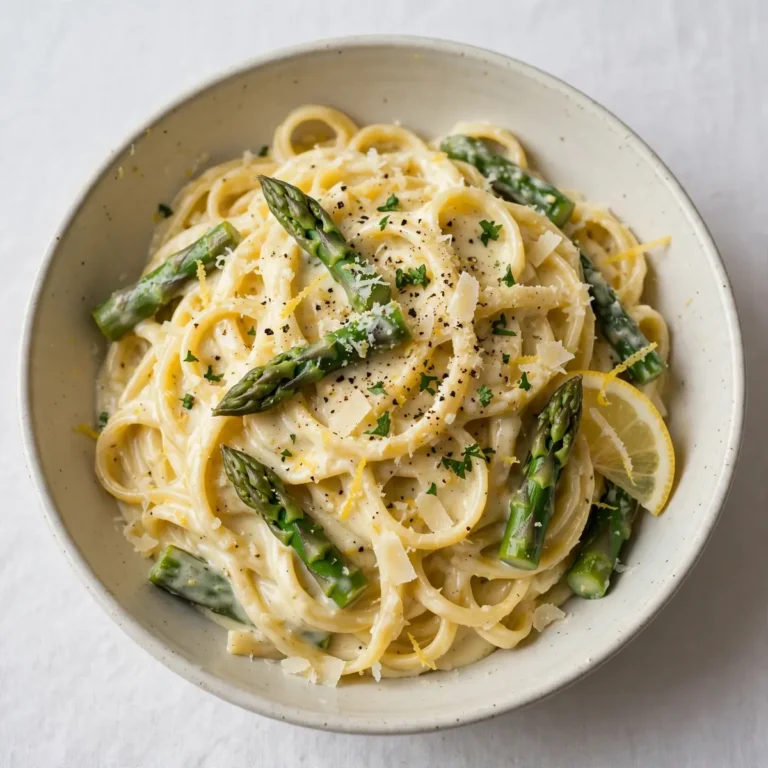
- Finish with lemon and cheese: Remove the pan from the heat. Sprinkle the lemon zest and squeeze the lemon juice evenly over the asparagus. Immediately scatter the grated Parmesan over the hot spears, allowing it to melt slightly from the residual heat. The cheese should cling to the asparagus in soft, lacy patches rather than forming a solid layer. Season with flaky sea salt and black pepper to taste.
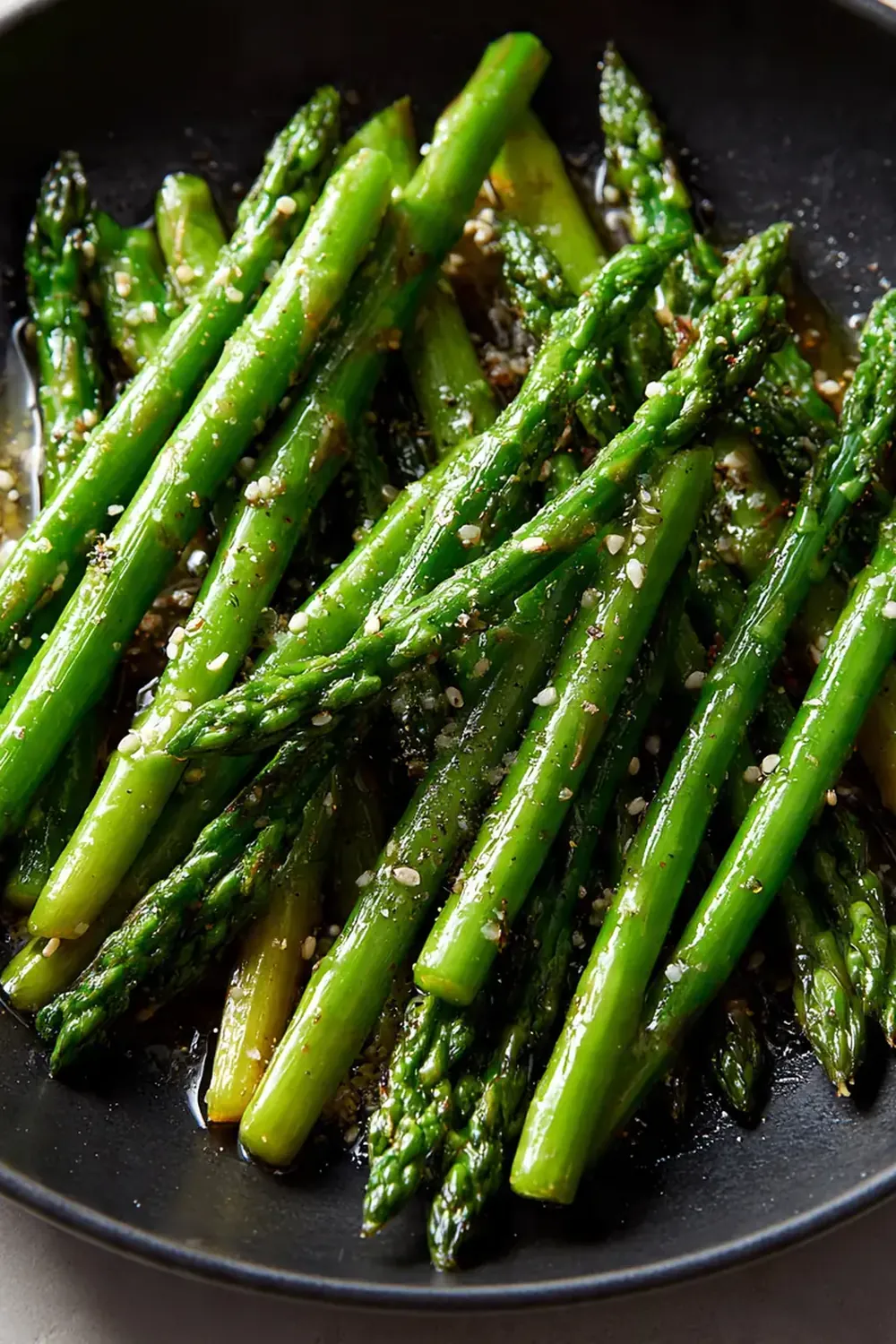
- Plate with intention: Using tongs, arrange the asparagus in a neat bundle on a warmed serving platter or individual plates. Place the spears all facing the same direction, with the tips aligned. Sprinkle the toasted pine nuts over the top, followed by the microgreens or edible flowers if using. Finish with a final pinch of flaky salt directly over the tips — this last touch provides a textural pop that elevates each bite.
Tips From My Kitchen
- Choose the right thickness: I used to struggle with this dish until I discovered that pencil-thick asparagus is the sweet spot. Spears that are too thin become mushy before they develop any colour, while thick ones can be woody even after cooking. Medium spears give you a tender interior with enough surface area for that gorgeous sear.
- Dry the asparagus after parboiling: This is the single most important step for achieving proper browning. Water on the surface creates steam, which lowers the pan temperature and prevents the Maillard reaction from occurring. Pat each spear dry individually with a kitchen towel — it takes an extra minute but makes the difference between steamed asparagus and seared asparagus.
- Use a heavy pan and let it preheat thoroughly: A lightweight pan loses heat too quickly when you add the asparagus, resulting in steaming rather than searing. Cast iron or stainless steel retains heat better. Give the pan a full two minutes on high heat before adding the oil, and another thirty seconds for the oil to heat. The sizzle when the asparagus hits the pan should be immediate and loud.
- Don’t overcrowd the pan: If you’re cooking for more than four people, work in batches. Overcrowding causes the temperature to drop dramatically, and the asparagus will release water and braise instead of sear. A single layer with a little space between each spear is the goal. Keep the first batch warm on a plate in a low oven while you finish the second.
- Toast the pine nuts yourself: Pre-toasted nuts lose their aroma quickly. Place raw pine nuts in a dry pan over medium heat and shake frequently. After about 2 minutes, they’ll release a warm, buttery scent and turn light golden brown. Remove them from the pan immediately, as they burn within seconds once they start colouring.
- Warm your serving platter: This is a small touch that makes a big difference for guests. Run your serving platter under hot water for a minute, then dry it thoroughly before plating. The warm surface keeps the asparagus at the ideal temperature for longer, so your guests can enjoy it at its best rather than watching it cool down on a cold plate.
Common Mistakes to Avoid
- Overcrowding the pan: When too many spears are crammed into the pan, they release moisture and create steam. This prevents the browning that gives the dish its signature flavour and texture. Cook in batches if necessary — it’s better to serve perfectly seared asparagus in two batches than a panful of limp, grey-green spears.
- Wrong temperature: Starting with a pan that isn’t hot enough is the most common error. The oil should shimmer and ripple instantly, and the sizzle should be aggressive. If you hear a faint hiss rather than a vigorous crackle, remove the pan from the heat and let it preheat for another minute before trying again.
- Skipping the rest time: After searing, let the asparagus rest for about 30 seconds on the warm platter before serving. This allows the internal heat to distribute evenly and the juices to settle. Cutting into a spear immediately will cause it to release its moisture onto the plate, making the dish look watery and diluting the flavour.
What to Serve With Delicious Cooking Asparagus Recipe
- Grilled chicken or lamb — the charred notes complement each other beautifully. For a spiced option, try my Lamb Kofta Recipe Grilled Spiced.
- A piece of simply pan-seared fish, such as salmon, which pairs wonderfully with the lemon and Parmesan in this dish. My Baked Salmon Recipe Healthy Dinner is a reliable choice.
- Light pasta dishes, like a cold pasta salad that doesn’t compete with the asparagus’s delicate flavour. The Mediterranean Pasta Salad Recipe Cold is a fantastic side.
- Quinoa or farro tossed with fresh herbs, for a grain bowl that feels substantial yet fresh.
Frequently Asked Questions
Delicious Cooking Asparagus Recipe
Ingredients
Method
- Prepare the asparagus: Hold each spear at both ends and gently bend until it snaps — it will naturally break at the woody, fibrous point where the tender part begins. Discard the woody ends. Using a vegetable peeler, shave off the tough outer layer from the bottom third of each spear. You should hear a clean, crisp snap as you bend them, and the peeled section will reveal a pale green, moist interior.
- Parboil for vibrant colour: Bring a large pot of salted water to a rolling boil. Drop the asparagus in and cook for exactly 90 seconds. The spears will turn a brilliant, almost electric green, and you'll notice they become slightly more pliable. Immediately transfer them to a bowl of ice water for two minutes to stop the cooking. Drain and pat them completely dry with a clean tea towel — this step is critical, as any moisture left on the surface will prevent proper browning later.
- Get the pan screaming hot: Place a large, heavy-bottomed frying pan (cast iron is ideal) over high heat for a full two minutes. Add the olive oil and swirl to coat the surface. The oil should shimmer and ripple immediately when it hits the pan, and you'll see the faintest wisp of smoke rising. This intense heat is what creates that restaurant-style char.
- Sear the spears: Lay the asparagus in a single, uncrowded layer in the hot pan. You should hear an immediate, vigorous sizzle — if the sound is weak, the pan isn't hot enough. Cook without moving them for 3 minutes. The bottoms will develop deep golden-brown marks, and the spears will release a nutty, toasty aroma. Use tongs to carefully turn each spear and cook for another 2 minutes on the second side. The texture should feel firm but with a slight give when gently squeezed.
- Add the garlic and butter: Reduce the heat to medium-low. Push the asparagus to one side of the pan and add the butter and minced garlic to the empty space. Let the butter melt and foam gently, about 30 seconds, until the garlic becomes fragrant and just starts to turn pale gold — you'll smell a sweet, mellow garlic aroma rather than a sharp, burnt one. Toss the asparagus in the butter-garlic mixture until every spear is glistening.
- Finish with lemon and cheese: Remove the pan from the heat. Sprinkle the lemon zest and squeeze the lemon juice evenly over the asparagus. Immediately scatter the grated Parmesan over the hot spears, allowing it to melt slightly from the residual heat. The cheese should cling to the asparagus in soft, lacy patches rather than forming a solid layer. Season with flaky sea salt and black pepper to taste.
- Plate with intention: Using tongs, arrange the asparagus in a neat bundle on a warmed serving platter or individual plates. Place the spears all facing the same direction, with the tips aligned. Sprinkle the toasted pine nuts over the top, followed by the microgreens or edible flowers if using. Finish with a final pinch of flaky salt directly over the tips — this last touch provides a textural pop that elevates each bite.
Notes
This is my go-to recipe when I need something quick but impressive, and I hope it becomes one of yours too. The beauty of this method is that it turns a humble vegetable into the most memorable part of the meal — I’ve had guests ask for the recipe before they’ve even finished their first bite. If you give it a try, I’d love to hear how it went. Drop a comment below and let me know which element of the presentation your guests noticed first. Happy cooking!